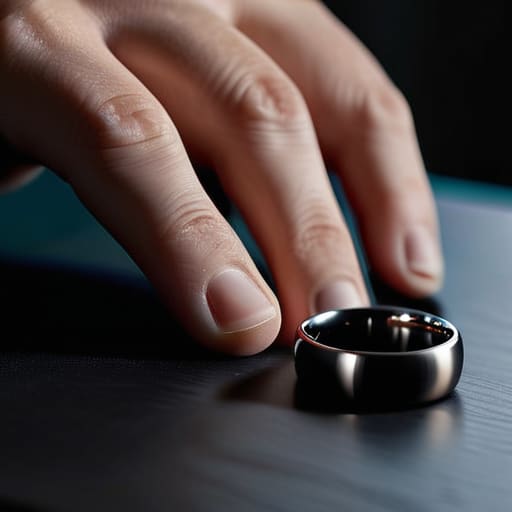
I was sitting at my workbench yesterday, cleaning the contacts on a 1974 Marantz receiver, when I saw another advertisement for a “revolutionary” smart ring. These companies want you to believe that strapping a miniature, unrepairable computer to your finger is the only way to understand your own body. They wrap these gadgets in glossy marketing speak about “biometric optimization,” but let’s call it what it actually is: expensive plastic designed to fail the moment you hit a certain depth in a pool or drop it on a concrete floor. I’ve spent thirty years looking at tolerances and material durability, and frankly, most of these rings look like they’d struggle to survive a week in a real workshop.
I’m not here to sell you on the latest Silicon Valley fever dream. My goal is to cut through the noise and tell you which of these devices actually hold up to a bit of scrutiny and which ones are just overhyped junk. I’ll be looking at the build quality, the sensor accuracy, and whether the battery life is actually worth the headache of charging it every other night. If you want the truth about whether a smart ring is a legitimate tool or just a distraction, you’ve come to the right place.
Table of Contents
- Smart Ring vs Fitness Tracker Which Actually Works
- Wearable Technology Trends 2024 Cutting Through the Hype
- The Truth About Smart Ring Battery Life and Reliability
- Don't Get Fooled: 5 Things to Check Before You Buy
- The Bottom Line: What You’re Actually Buying
- The Real Test of a Wearable
- The Bottom Line on Smart Rings
- Frequently Asked Questions
Smart Ring vs Fitness Tracker Which Actually Works

When you look at a smart ring vs fitness tracker, you’re really looking at a trade-off between data density and sheer convenience. I’ve spent years looking at sensor arrays in industrial machinery, and I know that more sensors don’t always mean better results—it just means more points of failure. A fitness tracker on your wrist is great if you want a screen that screams at you every time you sit too long, but that constant light and vibration can be a nuisance. If your primary goal is finding the best smart rings for sleep monitoring, the ring wins by a landslide. You don’t want a glowing piece of plastic strapped to your wrist when you’re trying to drift off; you want something unobtrusive that sits quietly against your skin.
However, don’t expect a ring to replace a dedicated sports watch if you’re training for a marathon. The contact surface area on a finger is much smaller than a wrist, which can mess with the accuracy of high-intensity movement tracking. If you want a device that survives a heavy workout and gives you real-time feedback, stick to the wrist. But if you’re tired of charging another gadget every night and just want reliable health data without the distraction, the ring is the smarter engineering choice.
Wearable Technology Trends 2024 Cutting Through the Hype

Every year, the tech industry throws a new wave of “revolutionary” gadgets at us, and frankly, it’s getting exhausting. Looking at the wearable technology trends 2024 is a bit like looking at a pile of blueprints that haven’t been stress-tested. You see these companies promising seamless integration and life-changing data, but they often forget the most basic requirement: durability. We’re seeing a massive push toward miniaturization, where everything is being squeezed into a tiny form factor, but in my experience, smaller often means more points of failure.
The current hype is leaning heavily into specialized use cases, like contactless payment smart rings or devices specifically marketed as health monitoring rings for women. While the idea of paying for a coffee with a tap of your finger sounds convenient on paper, I find myself questioning the long-term reliability of the NFC chips in such a small housing. It’s easy to design something that works in a controlled lab setting, but it’s a different story once you’re actually using it in the real world. I’m more interested in whether these devices can survive a week of heavy use without needing a constant charge or a software patch.
The Truth About Smart Ring Battery Life and Reliability

Let’s talk about the elephant in the room: how long these things actually stay powered. Manufacturers love to boast about “days of battery life,” but they never mention how quickly that number drops once you actually start using the sensors. In my experience, a device is useless if it’s sitting on a charging puck instead of on your finger. When looking at smart ring battery life, you have to account for the reality of daily use. If you’re using it for heavy sleep tracking or constant heart rate monitoring, don’t expect those marketing claims to hold up under pressure.
Then there is the matter of build quality. I’ve spent enough time around mechanical systems to know that miniaturization is a double-edged sword. When you cram all that circuitry into a tiny band, you sacrifice durability. I’ve seen too many of these gadgets fail because a simple seal gave way, letting moisture in. If you are looking for the best smart rings for sleep monitoring, you need something that feels substantial, not like a hollow piece of tin. If it can’t survive a shower or a bit of sweat, it’s not a tool—it’s a toy.
Don't Get Fooled: 5 Things to Check Before You Buy
- Look past the marketing fluff and check the sensor placement. If the ring doesn’t have a solid, contoured interior to keep those sensors pressed firmly against your skin, you’re just buying a very expensive piece of jewelry that won’t give you a single accurate reading.
- Verify the data ownership. I’ve seen too many companies hide their best features behind a monthly subscription fee. You pay a premium for the hardware; don’t let them nickel-and-dime you every month just to see your own heart rate data.
- Test the durability of the casing. I don’t care if it’s “water-resistant”—I want to know if it can handle a bit of grit, some soap, or a bump against a workbench without the finish peeling off like cheap paint.
- Check the app’s complexity. If the software requires a twenty-minute tutorial just to show you your step count, it’s poorly designed. A good tool should be intuitive; you shouldn’t need a manual to understand your own health metrics.
- Prioritize charging reliability. If the ring uses a proprietary, finicky charging cradle that’s easy to lose or breaks after three months, walk away. I want something that stays powered and stays out of my way.
The Bottom Line: What You’re Actually Buying
Don’t get blinded by the marketing; if you need constant, real-time data for a high-intensity workout, stick to a dedicated fitness tracker. A smart ring is a passive tool for long-term trends, not a high-performance sports instrument.
Prioritize build quality over sensor count. A ring that feels like a cheap toy will likely fail you within six months, so check the materials—titanium or ceramic is worth the extra scratch if it means the device actually lasts.
Always factor in the “subscription trap.” Before you hand over your cash, make sure the device’s core functions aren’t locked behind a monthly fee, or you’ll end up owning a very expensive piece of useless metal.
The Real Test of a Wearable
“I’ve spent my career looking at tolerances and build quality, and frankly, I’m tired of seeing companies charge a premium for gadgets that feel like toys. If a smart ring can’t survive a week of actual life without needing a charger or a software patch, it isn’t a tool—it’s a distraction.”
Roland Delacroix
The Bottom Line on Smart Rings
Look, I’ve spent enough time looking at schematics to know that more features don’t always mean better performance. We’ve covered a lot of ground here—from the reality of battery life to whether these rings actually hold up against a traditional fitness tracker. If you’re looking for a device that provides constant, granular data and a screen to stare at, a ring might leave you frustrated. But, if you want something that stays out of your way and offers reliable, passive monitoring without the constant need to charge a bulky watch, there is real value here. Just make sure you aren’t paying a premium for unnecessary software bloat that won’t be supported in two years.
At the end of the day, don’t let the marketing departments convince you that you need every new gadget just to stay healthy. Technology should serve you, not the other way around. Whether you decide to invest in a smart ring or stick to the tried-and-true methods, make sure the tool you choose is built to last and perform the way you need it to. Don’t settle for expensive plastic just because it’s the latest trend. Buy something that works, keep your expectations grounded, and get back to living your life.
Frequently Asked Questions
Can these rings actually survive a shower or a swim, or am I going to be worrying about water damage every single morning?
Look, I’ve seen too many “water-resistant” gadgets die the first time they hit a sink. Most of these rings claim an IP68 rating, which sounds impressive on a spec sheet, but that doesn’t account for soap, shampoo, or chlorine. If you’re swimming in a pool, don’t just toss it on. I’d recommend rinsing it with fresh water afterward. If it can’t handle a basic shower without you panicking, it’s not a tool; it’s a liability.
How much of the "health data" is actually accurate, and how much of it is just a software algorithm guessing what my body is doing?
Look, I’ve spent my career looking at sensor tolerances, and here’s the hard truth: most of these rings are making educated guesses. They use photoplethysmography—basically shining lights through your skin—to estimate heart rate and oxygen. It’s decent for trends, but don’t treat it like medical-grade equipment. A lot of that “deep sleep” data is just a software algorithm smoothing out the bumps to give you a pretty graph. It’s estimation, not precision.
Is it worth the high price tag if I have to pay a monthly subscription fee just to see my own basic stats?
Let me be blunt: if you have to pay a monthly fee just to view the data your own body produced, you’re being nickel-and-dimed. In my day, when you bought a tool, you owned it. Period. These subscription models are a racket designed to turn a one-time purchase into a lifelong drain on your wallet. If a company won’t give you access to your own basic stats without a recurring charge, walk away. It’s just more expensive plastic.
