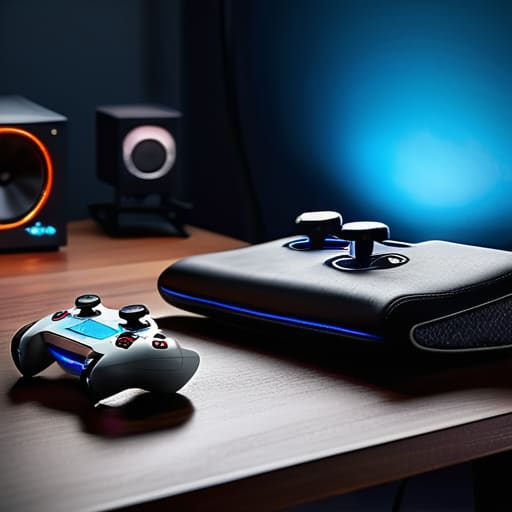
I was sitting in my workshop last Tuesday, trying to enjoy a bit of downtime, when my grandson’s wireless controller started stuttering mid-game. It’s the same old story: you pay a premium for the latest tech, only to have the gaming controller connectivity drop out the second a microwave turns on or a neighbor uses their Wi-Fi. It drives me up the wall. These manufacturers act like a stable connection is some kind of high-end luxury feature, but in my thirty years of systems engineering, I learned that a tool is only as good as its basic reliability. If a device can’t maintain a steady signal without a dozen workarounds, it isn’t “cutting edge”—it’s just poorly designed.
I’m not here to sell you on the latest proprietary wireless dongles or tell you that a $200 upgrade will solve your problems. I’m going to give you the straight truth about why your hardware is failing and how to actually fix the signal path using common sense. We’ll look at the physics of interference, the reality of Bluetooth latency, and when you should just give up on the wireless nonsense and plug in a damn cable.
Table of Contents
- Bluetooth vs 24ghz Latency Choosing Reliability Over Hype
- Dongle vs Built in Bluetooth Why Your Connection Is Failing
- Five Ways to Stop Your Controller From Quitting on You
- The Bottom Line on Staying Connected
- ## The Truth About Wireless Reliability
- The Bottom Line on Your Setup
- Frequently Asked Questions
Bluetooth vs 24ghz Latency Choosing Reliability Over Hype
I’ve spent enough time looking at circuit boards to know that not all wireless signals are created equal. Most manufacturers will try to sell you on the convenience of Bluetooth because it’s built into every laptop and smartphone on the planet. But if you’re actually trying to play a game that requires precision, you need to understand the real difference in bluetooth vs 2.4ghz latency. Bluetooth was designed for low-power data transfer—like sending a song to your headphones—not for the split-second reactions needed in a high-stakes match. It’s prone to jitter and lag that’ll have you wondering if your fingers are just slow.
If you want actual stability, you need a dedicated wireless connection via a USB dongle. This 2.4GHz method provides a much more direct line of communication, significantly reducing controller input delay compared to standard Bluetooth. When I’m testing these units, I look for that dedicated receiver because it bypasses the typical interference in wireless gaming caused by your neighbor’s Wi-Fi or your own microwave. It might mean having one more small piece of hardware plugged into your console, but I’d rather deal with a dongle than fight a connection that can’t keep up.
Dongle vs Built in Bluetooth Why Your Connection Is Failing
I’ve spent enough time looking at circuit boards to know that a direct line is always better than a crowded one. When you’re choosing between dongle vs built-in bluetooth, the answer usually comes down to how much junk is floating through the air in your living room. Built-in Bluetooth is fine for a casual puzzle game, but it’s a shared frequency. Every time your neighbor’s smart fridge or your own wireless headphones start talking, your controller has to fight for a turn to speak. That’s where you start seeing those frustrating micro-stutters.
If you want to actually succeed in a competitive match, you need a dedicated USB receiver. A proprietary dongle creates a private lane for your data, which is the most effective way of reducing controller input delay. It’s a simple matter of signal integrity. I’ve seen too many people spend hundreds on “next-gen” hardware only to have it fail because they relied on a generic connection method. If you want reliability, stop relying on the computer’s internal antenna and use the dedicated hardware that actually came in the box.
Five Ways to Stop Your Controller From Quitting on You
- Clear the line of sight. If you’ve got your PC tower tucked under a heavy metal desk or shoved behind a monitor, you’re asking for signal interference. Move that dongle to a front port or use a USB extension cable to get it out in the open.
- Ditch the Bluetooth for serious play. I don’t care how many features the box claims to have; if you’re playing something fast-paced, use a dedicated 2.4GHz wireless adapter. Bluetooth is fine for a casual puzzle game, but it’s too unstable for anything else.
- Watch out for “wireless congestion.” If your living room is packed with smart bulbs, mesh Wi-Fi routers, and tablets, your controller is fighting for airwaves. Try to keep your gaming setup on a different frequency or at least away from the main router.
- Check your battery voltage. A dying battery doesn’t just mean the controller turns off; it often means the radio transmitter starts cutting corners to save power, leading to those annoying input delays. If it’s acting up, plug it in and see if the lag vanishes.
- Stop relying on cheap cables. If you must play wired, don’t use a generic charging cable you found in a junk drawer. Those thin wires have terrible shielding. Get a proper, high-quality braided USB cable that can actually maintain a steady data stream.
The Bottom Line on Staying Connected
Stop relying on Bluetooth if you actually care about performance; if you aren’t using a dedicated 2.4GHz wireless dongle, you’re just inviting lag into your living room.
Don’t let the marketing fool you—”universal compatibility” is often just code for “it works poorly with everything.” Stick to a wired connection or a proprietary receiver for the most stable signal.
If you see a controller made mostly of thin, hollow plastic, expect the internal antenna to be just as flimsy. Build quality isn’t just about how it feels in your hand, it’s about how well it holds a signal.
## The Truth About Wireless Reliability
I’ve spent my life looking at schematics and tolerances, and I’ll tell you this: if a manufacturer won’t tell you the exact latency specs or the type of radio frequency they’re using, they’re selling you a fancy paperweight, not a tool for gaming.
Roland Delacroix
The Bottom Line on Your Setup
At the end of the day, don’t let the marketing departments convince you that “wireless” is a magic word that guarantees perfection. We’ve looked at why that 2.4GHz dongle is going to beat Bluetooth for responsiveness every single time, and why relying on your PC’s built-in antenna is a recipe for frustration. If you want a connection that doesn’t drop out right when the stakes are high, you need to prioritize stable signal paths over the convenience of a clutter-free desk. Stop chasing the latest flashy features and start looking at the actual hardware specifications. If the connection isn’t consistent, the device is nothing more than expensive plastic taking up space on your shelf.
I’ve spent enough time at a workbench to know that complexity is often just a mask for poor engineering. You don’t need a complicated array of software drivers or a high-priced subscription just to play a game. You need a tool that performs its function without you having to think about it. My advice? Invest in quality, stick to wired or dedicated wireless protocols, and demand reliability from the gear you buy. When you stop fighting your hardware, you can actually get back to what matters—the game itself. Now, go check your cables and make sure you’re actually set up to win.
Frequently Asked Questions
Is it actually worth spending the extra money on a controller that comes with its own dedicated USB dongle?
Look, if you’re asking if that extra $30 is worth it, the answer is a resounding yes. I’ve seen too many people try to save a few bucks by relying on standard Bluetooth, only to end up frustrated by lag and dropped inputs. A dedicated dongle creates a private, stable lane for your data. It’s the difference between a reliable mechanical linkage and a loose belt. If you want consistency, buy the dongle.
Can I use my wireless controller while it's plugged in for charging, or will that mess with the signal?
Most modern controllers are designed to handle “play-and-charge” without a hitch, but don’t expect miracles. If you’re using a high-quality USB cable, you shouldn’t see any signal interference. However, if you start noticing input lag or jitter while the cord is attached, it’s usually a sign of a cheap, poorly shielded cable acting like an antenna for noise. Stick to a solid, shielded wire, and you’ll be fine. Don’t let a flimsy cable ruin your setup.
Why does my controller work fine on my PC but start dropping inputs the moment I move a few feet away?
It’s a classic case of signal attenuation, and frankly, it’s a design flaw. When you’re sitting at your desk, the signal is strong enough to punch through the noise. But move a few feet away, and you’re likely hitting interference from your router or even the metal casing of your PC. Most of these wireless chips are built cheap to save a buck. If you want stability, stop relying on Bluetooth and use a dedicated 2.4GHz dongle.
