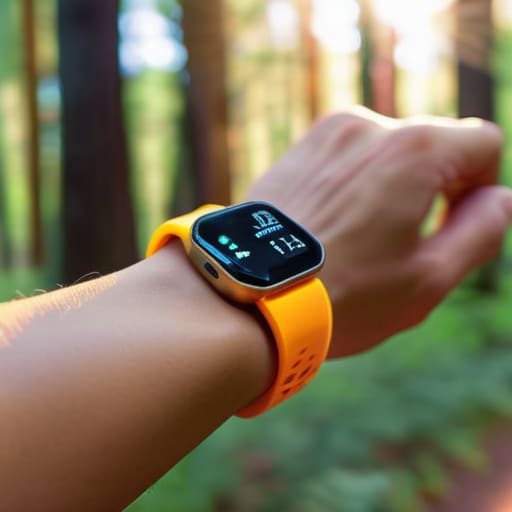
I was sitting at my workbench last Tuesday, cleaning the contact points on a 1970s Marantz receiver, when my nephew tried to show me his new “smart” watch. He spent twenty minutes scrolling through menus and syncing apps just to tell me he’d walked three thousand steps. It’s absurd. Most people buying a fitness tracker these days aren’t looking for a precision instrument; they’re being sold a glorified piece of expensive plastic that requires a software update every time you want to check your pulse. We’ve moved away from tools that simply work, and instead, we’ve embraced gadgets that demand constant attention just to perform basic functions.
I’m not here to sell you on the latest shiny toy or some data-driven fantasy that promises to revolutionize your life. My goal is much simpler: I want to help you find a device that actually holds up to scrutiny. I’ve spent my career looking at how things are built, and I’m going to apply that same skepticism here. I’ll show you which trackers provide reliable, straightforward data and which ones are just overhyped junk designed to drain your wallet and your patience.
Table of Contents
The Truth About Wearable Fitness Technology

Look, I’ve spent my career looking at schematics and stress-testing components, so I tend to look at these gadgets a bit differently than the marketing folks do. Most people see a shiny new gadget; I see a collection of sensors trying to make sense of your biology. The reality of wearable fitness technology is that it’s a bit of a mixed bag. On one hand, you have these impressive little machines capable of high-level biometric data tracking that would have been impossible a decade ago. On the other hand, a lot of this gear is built with the expectation that you’ll replace it in eighteen months when the casing cracks or the software becomes obsolete.
The problem isn’t the science—it’s the execution. You’ll see companies touting advanced smartwatch health features, but if the sensor accuracy fluctuates every time you break a sweat, the data is useless. I don’t care how many colorful graphs an app shows me on my phone if the underlying hardware can’t provide a consistent reading. You need to look past the flashy interface and ask yourself if the device is actually built to endure daily use, or if it’s just another piece of expensive plastic destined for a junk drawer.
Why Most Activity Monitoring Devices Fail You
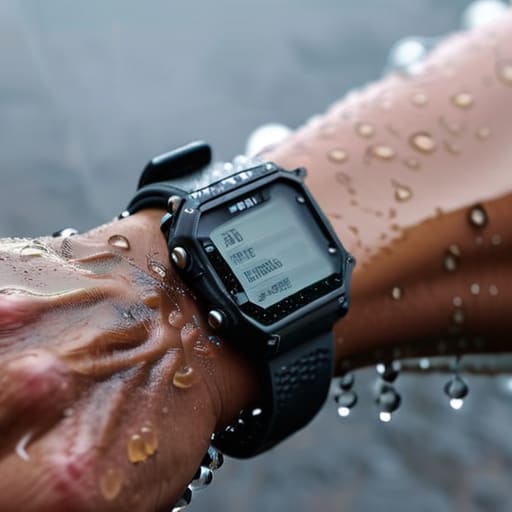
The problem isn’t that the sensors don’t work; it’s that the engineers behind these gadgets often prioritize flashy software over actual hardware durability. I’ve seen too many people buy into the hype of smartwatch health features only to realize the device is a glorified paperweight after six months. Most of these activity monitoring devices are built with cheap, lightweight plastics that can’t handle a bit of sweat or a sudden rainstorm. If a piece of equipment isn’t rugged enough to survive a day of actual labor, it has no business claiming to track your health.
Then there is the issue of data integrity. Many manufacturers promise high-end biometric data tracking, but once you get them on your wrist, the numbers start jumping around like a faulty needle on an old analog gauge. They claim to offer real-time physiological monitoring, but half the time, the algorithm is just making an educated guess. You aren’t paying for precision; you’re paying for a polished interface that masks mediocre engineering. If you can’t trust the reading, the whole device is nothing more than expensive junk.
Five Things to Check Before You Open Your Wallet
- Look for physical buttons over touchscreens. When you’re out for a walk or your hands are sweaty, a capacitive touchscreen is a nightmare to navigate; a tactile button actually gives you feedback.
- Demand battery longevity that makes sense. If a device needs to be tethered to a wall charger every single night, it’s not a tool—it’s a chore that you’ll eventually stop wearing.
- Check the sensor housing for build quality. I’ve seen too many of these flimsy things where the plastic casing around the heart rate sensor is so thin it cracks within a month of regular use.
- Ignore the “AI-driven” marketing fluff. If the manufacturer can’t explain exactly how they’re measuring your metrics without using buzzwords, they’re likely just selling you a glorified pedometer with a high markup.
- Verify the data sync reliability. A tracker is useless if the software is a buggy mess that fails to upload your stats to your phone; if the connection is unreliable, the data is worthless.
My Bottom Line on Buying a Tracker
Stop chasing the fancy touchscreen gimmicks and look at the sensor quality; if the device can’t provide consistent data, it’s just a glorified bracelet.
Prioritize battery life and build durability over app features, because a tracker is useless if it’s sitting on a charger half the time or breaks after a week of real use.
Don’t let marketing jargon fool you—if you can’t understand the data without a PhD, you’re better off sticking to a simple, reliable tool that does exactly what it says on the box.
The Reliability Gap
I’ve spent my career looking at tolerances and build quality, and frankly, most of these trackers are built like toys. If a device can’t survive a week of real-world use without needing a software update or a proprietary charger, it isn’t a tool—it’s just another piece of expensive plastic cluttering up your nightstand.
Roland Delacroix
The Bottom Line
Look, I’ve spent enough time looking at schematics to know when a product is built to last and when it’s just designed to end up in a landfill in eighteen months. If you’re shopping for a tracker, stop looking at the flashy color displays and start looking at the sensor accuracy and the battery life. You don’t need a device that requires a software update every time you want to go for a walk, nor do you need one that breaks the moment you sweat through a shirt. Focus on the fundamentals: reliable data, a sturdy build, and a simple interface that doesn’t require a PhD to navigate. If it can’t do the basic job of tracking your movement without constant troubleshooting, it isn’t a tool—it’s a distraction.
At the end of the day, remember that no piece of silicon or cheap plastic can actually do the heavy lifting for you. A fitness tracker is meant to be a gauge, much like a pressure gauge on an old steam engine; it tells you what’s happening under the hood, but it doesn’t drive the machine. Use the data to stay informed, but don’t let the numbers dictate your worth or your progress. Find a device that stays out of your way so you can focus on the actual work of staying healthy. Buy something that works, keep it simple, and get back to moving.
Frequently Asked Questions
How much of this data is actually accurate, or am I just looking at glorified guesswork?
Look, I’ll give it to you straight: most of it is glorified guesswork. These sensors use light to estimate blood flow, and they aren’t perfect. If you’re looking for medical-grade precision, put the tracker away and see a doctor. For most consumer gadgets, you’re looking at trends rather than hard facts. Use them to see if you’re moving more than yesterday, but don’t bet your health on a decimal point.
Are these things built to last, or will the battery and strap fail after six months of regular use?
Look, I’ve seen this pattern a thousand times in manufacturing. Most of these trackers are built with planned obsolescence in mind. The silicone straps are cheap enough to snap or irritate your skin within months, and those lithium-ion batteries? They’re non-replaceable. Once the capacity drops, you’re left with a paperweight. If you want something that lasts, look for reinforced materials and avoid anything where the battery is permanently sealed behind a glued-shut chassis.
Do I really need a subscription service just to see the basic numbers I've already paid for?
No, and frankly, it’s a racket. When you buy a piece of hardware, you should own the data it collects. Period. I’ve seen too many companies build decent sensors into a device, only to lock your own heart rate or sleep trends behind a monthly paywall. It’s poor engineering and even worse business. If you’re paying upfront, you shouldn’t have to rent your own information. Look for devices that offer local data storage without the recurring fees.
