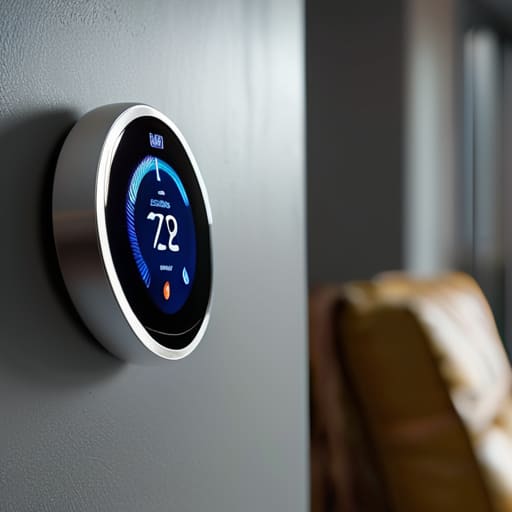
I was sitting in my workshop last Tuesday, surrounded by the solid, heavy brass components of a 1970s amplifier, when I realized just how far we’ve drifted from functional design. I looked over at the new smart thermostat my neighbor insisted on installing, and frankly, it looked like a piece of overpriced jewelry rather than a piece of climate control hardware. These companies want you to believe that you need a high-speed internet connection and a complex algorithm just to keep your living room at seventy degrees, but most of these devices are nothing more than expensive plastic shells wrapped in software that crashes more often than it works.
I’m not here to sell you on the latest “connected lifestyle” or some flashy app that promises to revolutionize your morning routine. My goal is much simpler: I want to help you separate the genuine engineering from the marketing fluff. Over the next few pages, I’m going to break down which models actually offer reliable temperature control and which ones are just glorified toys that will leave you shivering in the dark when the Wi-Fi goes down. I’ve taken my notepad out, and I’m ready to give you the straight truth.
Table of Contents
The Truth About Learning Thermostat Technology
The marketing folks love to talk up learning thermostat technology as if the device has a brain of its own. They claim these units observe your every move, mapping out your habits to optimize your comfort. In theory, it sounds like a dream for energy efficient home automation. In practice? I’ve seen too many of these “intelligent” systems get confused by a single weekend trip or a change in your work schedule, leading to a house that’s either a sauna or an icebox while you’re trying to sleep.
The reality is that most of these gadgets aren’t actually “learning”; they are just running complex algorithms based on your manual inputs. If you want real results in reducing utility bills, you shouldn’t rely on a machine to guess your intentions. I’ve found that a well-set series of programmable heating schedules beats an unpredictable “smart” algorithm every single time. You want a tool that follows your commands precisely, not one that tries to be your personal assistant and fails at the basic task of maintaining a steady temperature.
Mastering Remote Temperature Control Without the Headache
Now, let’s talk about the real reason people buy these things: the ability to adjust your home from your phone while you’re sitting on the couch or halfway across the country. On paper, remote temperature control sounds like a dream for anyone looking at reducing utility bills. But in practice, I’ve seen too many folks get stuck in a loop of “device not responding” errors because their Wi-Fi dropped or the app decided to run an update at the worst possible moment. If you can’t change the temperature without fighting a buggy interface, the feature is useless.
If you’re going to invest in this, you need to look for seamless smart home ecosystem integration. I don’t want a gadget that lives in a vacuum; I want something that talks to my existing hardware without requiring a software engineer to bridge the gap. A decent setup should allow you to set your programmable heating schedules once and then let the machine do its job. You shouldn’t be babysitting your HVAC system through a smartphone just to feel comfortable in your own living room.
Five Things to Check Before You Hand Over Your Credit Card
- Look for physical buttons or a solid dial. I don’t care how sleek a touchscreen looks on a marketing brochure; if the interface is finicky or doesn’t respond when your hands are cold, it’s a piece of junk. You need tactile feedback so you know the command actually registered.
- Verify your wiring before you buy. Most of these modern units require a “C-wire” for constant power. Don’t get caught in a loop of returning expensive hardware because the box didn’t mention you’d need to rewire your entire wall just to get it to turn on.
- Prioritize local control over cloud dependency. If the company’s servers go down or they decide to stop supporting the app, your thermostat shouldn’t become a glorified paperweight. A good device should still let you adjust the temperature manually without needing an internet connection.
- Avoid “feature creep.” If a thermostat is trying to tell you the weather in Tokyo or suggest recipes while it’s supposed to be managing your furnace, it’s over-engineered. Stick to the basics: accurate sensors, reliable scheduling, and a clear display.
- Check the sensor accuracy. I’ve seen plenty of these “smart” gadgets report a room temperature that’s three degrees off from a standard mercury thermometer. If the sensor isn’t calibrated properly, the whole “efficiency” argument falls apart because your HVAC system will be cycling on and off unnecessarily.
Bottom Line: Don't Get Fooled by the Hype
Stop chasing “learning” features that just add layers of software complexity; focus on a thermostat with solid, tactile controls and a reliable connection that won’t drop out when you need it most.
If a device requires a constant high-speed internet connection just to perform the basic task of heating your home, it’s a poorly engineered piece of junk—look for models with robust manual overrides.
Before you open your wallet, check the build quality; you want something that feels like a piece of hardware, not a cheap plastic toy that’s going to crack or fail in two years.
## The Reliability Test
“I don’t care how many fancy apps or ‘AI algorithms’ a manufacturer promises you; if the hardware can’t reliably trigger a relay to kick your furnace on in the middle of a January freeze, then it isn’t a tool—it’s just an expensive paperweight.”
Roland Delacroix
The Bottom Line on Smart Thermostats
Look, I’ve spent enough time looking at schematics to know that complexity is often just a mask for poor engineering. We’ve covered how learning algorithms can be a double-edged sword—sometimes they save you money, and sometimes they just get in your way—and we’ve looked at the reality of remote control apps that crash the moment you actually need them. When you’re shopping, don’t get blinded by a sleek touchscreen or a fancy app interface. Focus on the reliability of the connection and the simplicity of the manual overrides. If a device requires a stable internet connection just to perform the basic task of turning on your furnace, you aren’t buying a tool; you’re buying a liability.
At the end of the day, your home should serve you, not the other way around. You shouldn’t have to troubleshoot your heating system like it’s a piece of temperamental laboratory equipment. Buy something that feels substantial in your hand, something that promises clear functionality, and something that won’t become an expensive paperweight the next time your Wi-Fi hiccups. Invest in durability over hype, and you’ll find that the best technology is the kind that stays in the background, doing its job quietly and efficiently for years to come.
Frequently Asked Questions
Will this smart thermostat actually work with my old HVAC system, or am I going to need to hire an electrician just to get it running?
Look, don’t go calling an electrician just yet. Most of these modern units are designed to be “plug and play,” but there’s a catch: the C-wire. Back in my day, we didn’t need constant power for a simple dial. These smart gadgets do. Pull your current cover off and check for that common wire. If you don’t see it, you might need a power adapter kit, or you’ll be paying a professional to rewire your walls.
How much of a difference does a "smart" feature actually make on my monthly utility bill, or is it just marketing fluff?
Look, I’ve crunched the numbers, and it isn’t all smoke and mirrors, but don’t expect a miracle. If you’re the type who leaves the AC cranking while you’re out running errands, a smart thermostat will shave a decent chunk off your bill by catching those mistakes. However, if you’re already disciplined with your manual dial, you’re mostly paying for the convenience of an app, not actual efficiency. It’s utility, not magic.
If my internet goes down, am I going to be stuck in a house that's freezing or sweltering because the thermostat can't "think"?
Look, I’ve seen enough “smart” systems fail when the Wi-Fi drops to know this is a valid concern. Here’s the bottom line: if the device is designed correctly, your house won’t turn into an icebox. A decent thermostat should have local logic. It might lose the ability to talk to your phone or check the weather online, but its core job—running your HVAC based on the programmed schedule—shouldn’t depend on a cloud server. Check the specs for “offline functionality” before you buy.
