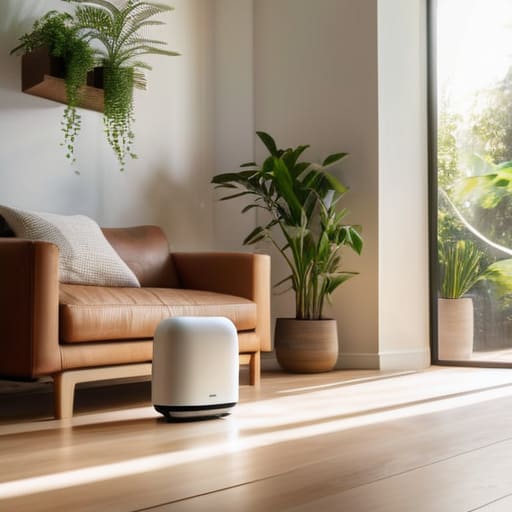
I was sitting in my workshop last Tuesday, cleaning out some old capacitors, when I realized just how much nonsense is being sold to us under the guise of “innovation.” I saw an ad for one of those high-end smart air purifiers that claimed it could monitor your health via a cloud-based AI algorithm. Give me a break. I spent thirty years in systems engineering, and I can tell you right now: if a machine needs a constant Wi-Fi connection and a subscription service just to tell you the air is dusty, it’s not a tool—it’s a glorified paperweight. Most of these gadgets are just cheap fans wrapped in expensive plastic, designed to trick you into thinking you’re buying “intelligence” when you’re really just buying more software bugs.
I’m not here to sell you on the latest app-enabled bells and whistles that will be obsolete by next Christmas. My goal is to strip away the marketing fluff and look at the actual hardware. I’m going to show you how to distinguish between a machine with a high-quality HEPA filter and a sensor that actually works, and which ones are just expensive distractions. We’re going to focus on build quality, airflow mechanics, and real-world reliability so you can invest your hard-earned money in something that actually clears the air.
Table of Contents
- The Truth About Hepa Filtration Efficiency
- Why Pm25 Particle Detection Actually Matters
- Five Things to Check Before You Hand Over Your Credit Card
- Roland’s Bottom Line: What to Look for Before You Buy
- Don't Get Fooled by a Pretty Interface
- The Bottom Line on Smart Air Purifiers
- Frequently Asked Questions
The Truth About Hepa Filtration Efficiency
The Truth About HEPA Filtration Efficiency
I’ve spent enough time looking at technical spec sheets to know that marketing departments love to play games with numbers. When you’re browsing for a new unit, you’ll see “HEPA-type” or “HEPA-like” plastered all over the box. Let me be clear: that is a red flag. In my experience, if it isn’t certified True HEPA, it’s just a glorified fan with some cheap paper inside. You want a machine that guarantees a specific level of HEPA filtration efficiency, specifically capturing 99.97% of particles down to 0.3 microns. Anything less is just moving dust around your living room instead of actually removing it.
It isn’t just about the filter, though; it’s about how the machine handles what it finds. Many of these IoT enabled air cleaners claim to be “smart,” but if the sensor is poorly calibrated, the machine won’t ramp up when you actually need it. I’ve seen units that sit idle while a person is coughing right next to them because the sensor is too slow to react. You need a device where the hardware and the software actually talk to each other effectively.
Why Pm25 Particle Detection Actually Matters
Most of these manufacturers love to brag about their flashy displays and colorful LED rings, but if the machine can’t actually “see” what’s in the air, it’s just a glorified fan. This is where PM2.5 particle detection becomes the real litmus test for any decent unit. PM2.5 refers to those microscopic particles—think smoke, pollen, or combustion byproducts—that are small enough to get deep into your lungs. If a device doesn’t have a dedicated laser sensor to track these specific particulates, it’s essentially flying blind.
I’ve seen too many people get caught up in the hype of IoT enabled air cleaners just because they can control them from a smartphone. But a fancy app is useless if the machine is running on a static timer instead of reacting to the room. You want real-time air quality monitoring that triggers the motor the second someone starts cooking or a window is opened. If the sensor is cheap and sluggish, the machine won’t ramp up until the air is already fouled. Don’t pay extra for a “smart” label if the hardware lacks the precision to detect the invisible stuff.
Five Things to Check Before You Hand Over Your Credit Card
- Look for a physical button override. If the only way to change the fan speed is through a buggy smartphone app that requires a cloud connection, you’ve bought a paperweight, not a tool. I want to be able to walk up to the machine and turn it up without hunting for my phone.
- Verify the CADR rating, not the marketing fluff. Manufacturers love to use words like “ultra-quiet” or “smart-sensing” to distract you, but the Clean Air Delivery Rate (CADR) is the only number that tells you how much actual work that motor is doing per minute.
- Check the filter replacement cost upfront. I’ve seen too many people buy a reasonably priced unit only to realize the proprietary replacement filters cost as much as a new machine every six months. If the filters aren’t readily available or are priced like gold, walk away.
- Demand a real sensor, not a programmed guess. Some of these “smart” units just ramp up the fan based on a timer or a cheap light sensor. You want a unit with a dedicated laser particle sensor that reacts to actual smoke or dust in the air, not just a pre-set schedule.
- Inspect the build quality of the casing. If the housing feels like thin, flimsy plastic that rattles when the fan hits high speeds, the motor won’t stay calibrated for long. A solid, heavy chassis usually means better vibration dampening and a longer lifespan.
Roland’s Bottom Line: What to Look for Before You Buy
Don’t get distracted by fancy smartphone apps or LED light shows; prioritize a true HEPA filter and a sensor that actually responds to real-world changes in your air.
Check the build quality and filter replacement costs upfront, because a cheap machine that uses proprietary, overpriced filters is just a way for companies to bleed you dry over time.
If a manufacturer can’t clearly list the CADR (Clean Air Delivery Rate) for your specific room size, they’re likely selling you marketing fluff instead of actual performance.
Don't Get Fooled by a Pretty Interface
I’ve seen enough engineers try to hide mediocre hardware behind a flashy smartphone app to know the truth: a sensor that can’t accurately read a room is just a glorified nightlight, and no amount of Bluetooth connectivity will make up for a poorly designed fan motor.
Roland Delacroix
The Bottom Line on Smart Air Purifiers
At the end of the day, don’t let a sleek touchscreen or a flashy smartphone app distract you from the actual mechanics of the machine. I’ve seen too many people shell out hundreds of dollars for a device that looks great on a kitchen counter but lacks a true HEPA filter or a sensor capable of detecting real pollutants. If the machine can’t accurately track PM2.5 levels or if the build quality feels like a cheap toy, it isn’t doing its job. You need to prioritize mechanical reliability and filtration standards over whatever bells and whistles the marketing department is pushing this year. A smart feature is only useful if the hardware behind it is robust enough to actually clean your air.
My advice is simple: buy for the long haul, not for the trend. When you’re looking at a spec sheet, look past the “smart” labels and ask yourself if the components are built to last more than a single season. You aren’t just buying a gadget; you’re investing in the air your family breathes every single day. Invest in a machine that values substance over software, and you won’t find yourself replacing a piece of expensive plastic just twelve months from now. Do your homework, check the filters, and buy something that actually works.
Frequently Asked Questions
Do I really need a smartphone app to control the unit, or can I just use the physical buttons on the machine?
Look, if you can turn on a lamp with a switch, you don’t need an app. I’ve seen too many “smart” devices that become paperweights the moment your Wi-Fi hiccups or the manufacturer stops updating their software. If the unit has solid, tactile buttons on the chassis, use them. An app is just a convenience, not a necessity. Don’t pay a premium for “connectivity” if it makes the machine harder to operate.
How often am I actually going to have to replace these expensive filters, and is there a way to tell if they're truly dirty?
Look, the manufacturers will tell you to swap filters every six months like clockwork, but that’s often just a way to keep you spending. I don’t trust a timer alone. Instead, pull the filter out and actually look at it. If the pleats are gray or caked with dust, it’s done. If it still looks white, keep using it. Don’t let a programmed notification trick you into throwing away perfectly good hardware.
Will these smart sensors actually trigger the fan speed up when I'm cooking, or is the sensor too slow to react to real smoke?
That’s the million-dollar question. Most of these consumer-grade sensors use laser scattering to detect particles, and they aren’t instantaneous. If you’re searing a steak, the smoke hits the air long before the sensor registers the spike. You’ll likely see a lag of a minute or two before that fan actually kicks into high gear. Don’t rely on “auto mode” alone when cooking; I usually just manually crank the fan up myself.
