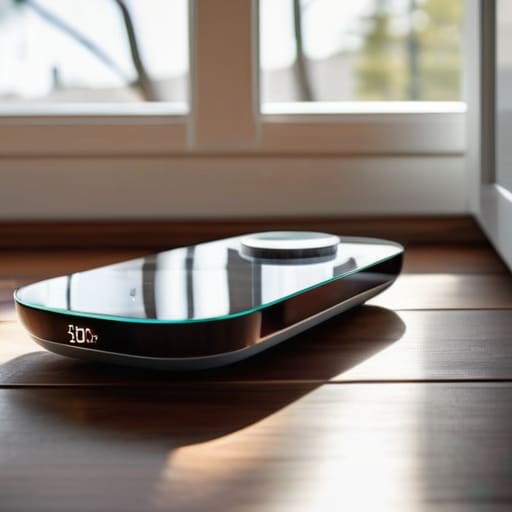
I was tinkering with an old Marantz receiver last Tuesday when I realized how much the world has changed—and not always for the better. Nowadays, you walk into any big-box store and they’ll try to sell you a piece of glorified junk that claims to revolutionize your training. I’ve seen it a dozen times: these “smart scales for athletes” that promise the moon but are really just overpriced slabs of glass held together by buggy software and cheap sensors. If you’re looking for a device that requires a stable Wi-Fi connection and a PhD just to tell you if you’ve gained a pound of muscle, you’re in the wrong place.
I’m not here to sell you on the latest marketing gimmick or some shiny app that looks good in a commercial. My goal is to cut through the digital noise and help you find gear that actually stands up to scrutiny. I’ve spent my life looking at tolerances and build quality, so I’m going to tell you which scales provide legitimate data and which ones are just expensive plastic designed to drain your wallet. We’re going to look at the specs that matter, not the ones that look pretty on a box.
Table of Contents
- Decoding Bioelectrical Impedance Analysis Without the Nonsense
- Reliable Muscle Mass Tracking That Actually Matters
- Five Things to Check Before You Hand Over Your Credit Card
- What to Look for Before You Open Your Wallet
- The Truth About the Numbers
- Bottom Line: Don't Let the Gadgets Fool You
- Frequently Asked Questions
Decoding Bioelectrical Impedance Analysis Without the Nonsense
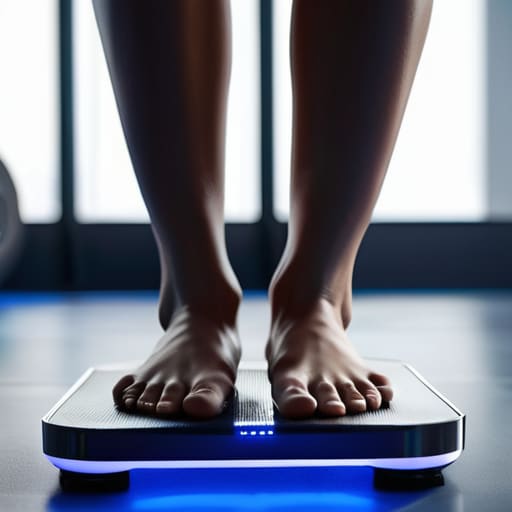
Most of these manufacturers love to throw around terms like “bioelectrical impedance analysis” to make a simple process sound like rocket science. In plain English, it’s just a tiny, harmless electrical current sent through your feet to measure how much resistance your body offers. Since fat doesn’t conduct electricity well but muscle does, the scale uses that resistance to guess your body composition metrics. It isn’t magic, and it isn’t a medical-grade scan, but it’s a decent way to see if your training is actually paying off.
The problem is that these devices are incredibly sensitive to how much water you’ve had or even what you ate for lunch. If you’re looking for precise muscle mass tracking, you have to understand that the numbers will fluctuate. I’ve seen too many people get discouraged because the scale jumped two percent overnight. It’s not that you gained fat; it’s likely just a change in hydration. Don’t get hung up on the daily decimal points. Instead, look at the long-term trends over several weeks. That is where the real data lives.
Reliable Muscle Mass Tracking That Actually Matters
When you’re training hard, you aren’t just looking for a number on a screen; you’re looking for proof that your sweat is actually building something. Most of these gadgets claim to provide advanced muscle mass tracking, but half of them are just guessing based on your weight and height. If you want data that actually means something, you need to look at how the device handles consistency. I’ve seen too many people chase a moving target because their scale fluctuates every time they drink a glass of water. You need a unit that provides a stable baseline so you can tell if you’re actually gaining lean tissue or just holding onto water weight.
Don’t get distracted by flashy apps that promise to revolutionize your life. Real athletic performance monitoring comes down to the precision of the sensors and how they handle your specific body composition metrics over time. I prefer a scale that doesn’t require a software update just to tell me my fat percentage. If the device can’t provide a steady, repeatable reading under the same conditions, it’s nothing more than an expensive paperweight. Look for hardware that prioritizes long-term data trends over daily vanity numbers.
Five Things to Check Before You Hand Over Your Credit Card
- Stop chasing the fancy app interface. I don’t care if the software looks like it belongs on a spaceship; if the scale can’t give you a consistent reading three days in a row, it’s nothing more than a glorified bathroom scale. Look for hardware that prioritizes sensor stability over pretty animations.
- Check the feet. Most of these modern gadgets use cheap, thin plastic feet that wobble on anything but a perfectly level floor. A scale that isn’t stable is a scale that gives you garbage data. Look for heavy-duty, non-slip rubber feet that keep the unit planted firmly.
- Demand consistency over “accuracy.” No consumer-grade scale is going to give you a medically precise body fat percentage—let’s be honest about that. What you actually need is a device that gives you the same result every time you step on it under the same conditions. If the numbers jump around wildly every morning, toss it in the bin.
- Beware of the “Subscription Trap.” I see it all the time now: companies sell you a piece of hardware for a decent price, only to lock your actual data behind a monthly paywall. Don’t buy a scale that treats your own health metrics like a streaming service. If you can’t see your progress without a monthly fee, it’s a bad investment.
- Test the connectivity before you commit. There is nothing more frustrating than a “smart” device that refuses to talk to your phone because the Bluetooth chip is bottom-tier. If the manufacturer doesn’t clearly state which operating systems it supports, assume it’s going to be a headache and move on.
What to Look for Before You Open Your Wallet
Stop chasing every single metric the app promises; focus on the consistency of the core data, because a scale that fluctuates wildly every morning is nothing more than a glorified paperweight.
Look for hardware with a solid build and a high-quality sensor plate rather than those cheap, flimsy plastic models that feel like they’ll crack if you step on them too hard.
If the device requires a constant, high-speed internet connection and a complex subscription just to show you your weight, walk away—you’re paying for software bloat, not better engineering.
The Truth About the Numbers
I don’t care how many colorful graphs they flash on your smartphone screen; if the scale can’t give you the same reading twice in a row, it isn’t a piece of precision equipment—it’s just a glorified bathroom decoration.
Roland Delacroix
Bottom Line: Don't Let the Gadgets Fool You
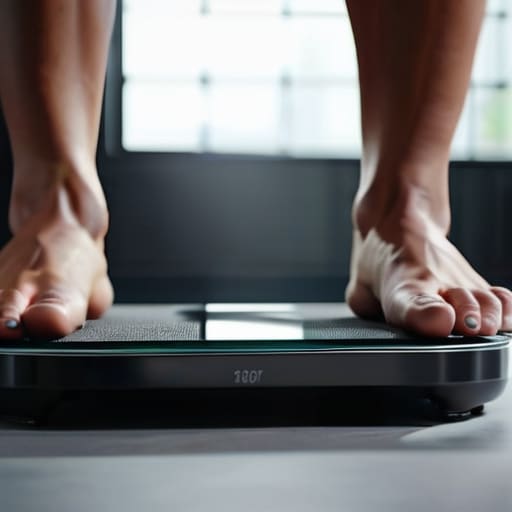
Look, I’ve spent enough time looking at schematics to know that a fancy touchscreen doesn’t make a sensor more accurate. If you’re serious about your training, you need to stop chasing every shiny new app and focus on the fundamentals we discussed: consistent BIA technology and a device that provides meaningful trends rather than just random numbers. A smart scale is a tool, not a magic wand. If the build quality feels like a cheap toy and the data fluctuates wildly every time you step on it, throw it in the bin. You want a machine that offers repeatable, reliable metrics so you can actually make informed decisions about your nutrition and recovery.
At the end of the day, no piece of hardware is going to do the heavy lifting for you. You can buy the most expensive, high-spec scale on the market, but it won’t lift a single pound or run an extra mile. Use these devices to guide your progress, but don’t let them become your master. Focus on the work, keep your eyes on the long-term trends, and treat your gear as a way to verify your effort, not a replacement for it. Buy something built to last, keep your data organized, and get back to the training.
Frequently Asked Questions
How much can I actually trust these body fat percentages when I step on the scale at different times of the day?
Look, if you’re checking your body fat percentage at 7:00 AM after a coffee and again at 8:00 PM after a heavy dinner, you’re chasing ghosts. These sensors rely on electrical currents, and those currents are incredibly sensitive to your hydration levels. If you’re dehydrated or just ate, the reading is going to drift. Don’t sweat the daily fluctuations; just pick a consistent time—ideally first thing in the morning—and stick to it.
Is it worth paying a premium for a scale with extra sensors, or is the basic model's data just as accurate?
Look, I’ve seen this pattern a dozen times in manufacturing: companies adding extra bells and whistles just to justify a higher price tag. If you’re looking for raw accuracy, more sensors don’t always mean better data. A basic, well-built scale will give you a consistent reading. Don’t get lured into the “premium” trap unless those extra sensors provide specific metrics you actually use for training. Otherwise, you’re just paying for more expensive plastic.
Will the data from this scale actually sync with my existing fitness apps, or am I just buying another closed-loop ecosystem?
That’s the right question to ask. Most manufacturers want to trap you in their own little walled garden, forcing you to use their mediocre app just to see your weight. Before you pull the trigger, check the specs for “third-party integration.” You want something that plays nice with Apple Health, Google Fit, or Strava. If they don’t explicitly list those connections, you aren’t buying a tool; you’re buying a digital leash.
