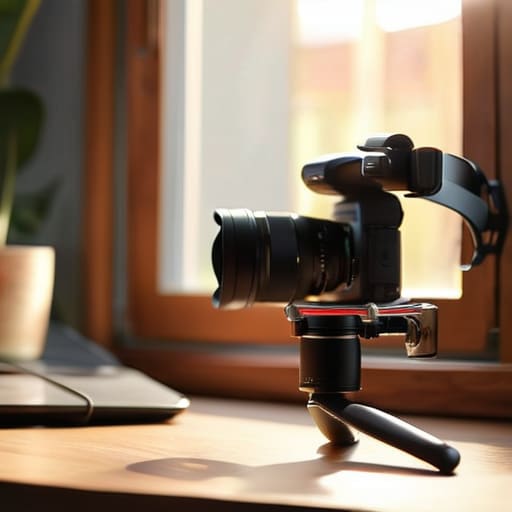
I spent thirty years in manufacturing, where if a component wasn’t built to spec, the whole line ground to a halt. Nowadays, I see people dropping a month’s mortgage on a piece of gear only to find out it’s nothing more than overpriced plastic that overheats the second you hit record. If you’re trying to find the best mirrorless cameras for vlogging, you’re likely being bombarded by influencers who care more about aesthetics than actual build quality or thermal management. It’s frustrating to watch good creators get sidelined by hardware that simply can’t handle the job.
I’m not here to sell you on the latest hype or some flashy feature that you’ll never actually use. Instead, I’ve sat down with my notepad and stripped away the marketing fluff to find the tools that actually hold up under pressure. In this list, I’m going to show you five specific models that offer the reliability and durability you actually need. By the time you finish reading, you’ll know exactly which cameras are worth your hard-earned money and which ones are just expensive paperweights.
Table of Contents
- The Workhorse You Can Trust
- Built Like a Tank for Serious Use
- The All-Rounder That Doesn't Overcomplicate Things
- Compact Power Without the Fluff
- The Professional's Choice for High Stakes
- The Bottom Line: Don't Get Fooled by the Spec Sheet
- The Engineer's Bottom Line
- The Bottom Line
- Frequently Asked Questions
The Workhorse You Can Trust

If you’re looking for something that won’t quit on you halfway through a shoot, the Sony ZV-E10 is the one I keep pointing people toward. It’s not the flashiest piece of kit on the market, but the autofocus is damn near perfect, which is exactly what you need when you’re moving around and trying to keep the lens on your face. I’ve spent enough time with mechanical systems to know that a device is only as good as its ability to do its primary job without constant adjustment.
Built Like a Tank for Serious Use

Now, if you have a bit more capital and you actually care about how a camera feels in your hands, the Panasonic Lumix GH6 is in a different league. This isn’t some flimsy gadget designed for teenagers; it feels like a piece of real engineering. The thermal management is what caught my eye—it’s built to handle long recording sessions without the dreaded overheating issues that plague so much modern electronics.
The All-Rounder That Doesn't Overcomplicate Things
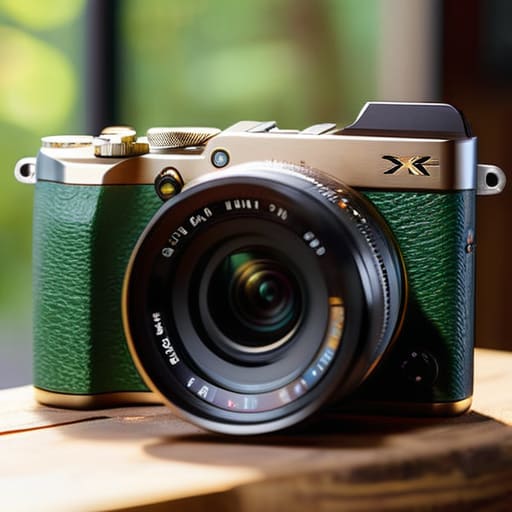
I’ve always believed that if a tool is too complicated to use, it’s a bad tool. The Fujifilm X-S20 follows that philosophy quite well. It strikes a fine balance between high-end specifications and a user interface that doesn’t require a computer science degree to navigate. The color science is also quite impressive right out of the box, meaning you won’t spend hours hunched over a monitor trying to fix colors that look unnatural.
Compact Power Without the Fluff
Sometimes you just want something that fits in a jacket pocket but doesn’t sacrifice the ability to produce a decent image. The Sony ZV-1 II is a bit of a specialized beast, but for pure vlogging, it’s hard to argue with its efficiency. It’s a fixed-lens setup, which means you lose the ability to swap glass, but for a lot of people, that’s actually a feature, not a bug. You don’t have to worry about dust getting on a sensor or carrying a heavy bag of lenses.
The Professional's Choice for High Stakes
If you are moving into the territory where you are filming clients and your reputation is on the line, you look at the Canon EOS R7. This is a serious piece of hardware with a robust build quality that suggests it can take a bit of a beating. The autofocus tracking is incredibly snappy, and it handles changing light conditions with a grace that most consumer gear lacks.
The Bottom Line: Don't Get Fooled by the Spec Sheet
Stop chasing every single megapixel or fancy software feature; if the build quality is flimsy and the mounting points feel like cheap plastic, the camera will fail you long before you get the perfect shot.
Prioritize reliability in the basics—you need a solid grip, a screen that actually works in sunlight, and an autofocus system that doesn’t hunt like a nervous dog every time you move.
Buy for the long haul by looking at the ecosystem, not just the body; a camera is useless if you can’t find decent, durable lenses that don’t cost more than a used car.
The Engineer's Bottom Line
I don’t care how many megapixels or fancy AI features a manufacturer throws at you in their marketing brochures; if the build quality is flimsy and the menu system is a labyrinth, you’re just buying a very expensive paperweight that’s going to fail you when the light gets low or the weather turns sour.
Roland Delacroix
The Bottom Line
At the end of the day, choosing a camera shouldn’t feel like you’re trying to decode a manual for a jet engine. Whether you went with the rugged build of a Sony or the intuitive interface of a Fujifilm, the goal is the same: you want a tool that stays out of your way so you can actually do the work. I’ve seen too many folks get caught up in chasing every single spec on a datasheet, only to realize they bought a piece of gear that’s too delicate for real-world use. Remember, you aren’t just buying a sensor and a lens; you are investing in reliable hardware that needs to perform when the light is fading and the pressure is on. Don’t let the marketing fluff distract you from the build quality and the ergonomics.
Once you’ve made your choice and tucked that camera into your bag, stop worrying about the gear and start focusing on the story. A camera is just a machine, and no amount of expensive glass is going to make up for a lack of vision. I spent my career making sure systems ran smoothly so the end product would be flawless, and it’s the same principle here. Get yourself a device that you can trust, keep it well-maintained, and then get out there and create something. The best camera in the world is useless if it’s sitting on a shelf gathering dust.
Frequently Asked Questions
Do I really need to spend extra money on a dedicated external microphone, or will the built-in ones suffice for a basic setup?
Look, I’ve spent enough time around manufacturing plants to know that if the input is garbage, the output is garbage. Your camera’s built-in mic is fine for capturing the sound of a breeze, but for actual talking? It’s flimsy. It picks up every handling noise and wind gust, making your footage sound amateur. If you want to sound like a professional instead of a hobbyist, buy a dedicated mic. It’s not an extra; it’s a necessity.
How much does lens quality actually matter if I'm just filming myself for social media?
Look, I’ve seen enough cheap glass to know that “good enough” can be a trap. If you’re just filming on a phone for a quick clip, you’re fine. But if you’re serious about a brand, don’t skimp on the lens. A mediocre sensor can be saved by a sharp lens, but no amount of software can fix a blurry, distorted image caused by poor optics. Invest in glass that actually holds focus.
Will these cameras hold up if I'm filming outdoors in the heat, or am I going to run into overheating issues halfway through a shoot?
Look, if you’re planning on filming under a midday sun, you need to be realistic. Most of these compact mirrorless units are packed tight with electronics, and heat is the enemy of any circuit board. If you’re pushing 4K video in high temperatures, you’re going to see a thermal warning eventually. Don’t expect a miracle; if you’re working in the heat, keep some shade handy and don’t expect these to run forever.
