I was out in the yard last Tuesday, staring at a puddle that shouldn’t have been there, wondering why my “state-of-the-art” controller was currently nothing more than a glorified paperweight. I’ve spent thirty years in systems engineering, and if there is one thing I’ve learned, it’s that adding a Wi-Fi chip to a valve doesn’t make it better; it just gives it more ways to fail. Most of the marketing junk surrounding smart home irrigation today is designed to separate fools from their money, promising seamless automation while delivering nothing but buggy apps and fragile sensors that can’t handle a bit of actual dirt.
I’m not here to sell you on the latest cloud-connected gadget or some overpriced subscription service you’ll forget you even signed up for. My goal is simple: I want to help you find hardware that actually holds up under pressure. I’ve spent the last few weeks digging into the specs and testing the build quality of these systems to see which ones are worth your time and which ones are just expensive plastic. I’ll tell you exactly what works, what breaks, and how to keep your lawn green without needing a computer science degree to operate your own sprinkler.
Table of Contents
Weather Based Irrigation Controllers That Actually Work
If you’re looking to move away from the old-school timer that runs regardless of whether it’s pouring rain or a heatwave, you need to look closely at weather-based irrigation controllers. Most of the cheap units I see on the shelf claim to be “smart,” but they’re really just glorified clocks with a Wi-Fi chip. A proper controller needs to pull real-time data from local weather stations to adjust your cycle. If the system doesn’t have a reliable way to sense local humidity or precipitation, you’re just throwing money down the drain—literally.
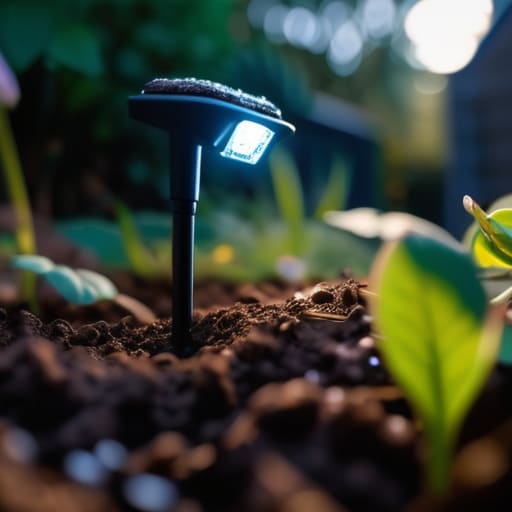
I’ve spent a fair amount of time looking into soil moisture monitoring technology, and that’s where the real value lies. Instead of guessing based on a generic forecast, these sensors tell the controller exactly how much water is actually sitting in the root zone. It’s a much more mechanical, logical way to handle reducing residential water waste. I prefer systems that feel like engineered tools rather than toys; you want something with solid terminals and a controller that doesn’t lose its settings every time the power flickers.
Cutting Through the Hype of Iot Garden Management
The marketing departments for these tech companies love to throw around terms like “IoT garden management” to make a simple timer sound like a space shuttle launch. They’ll show you glossy apps with colorful graphs and promise you’ll never lift a finger again. But here’s the reality: half these gadgets are just glorified remote controls that rely on a shaky Wi-Fi signal to function. If your router decides to take a nap, your entire yard is at the mercy of a cloud server halfway across the country. I’ve seen too many folks get caught up in the bells and whistles of soil moisture monitoring technology only to find out the sensors are poorly calibrated and give readings that wouldn’t pass a basic engineering audit.
Before you drop a few hundred dollars on a suite of connected devices, ask yourself if you actually need the “smart” part or if you just want reliability. There is a massive difference between a system that actually helps with reducing residential water waste and one that just sends annoying notifications to your phone every time a cloud passes by. Don’t let the fancy interface distract you from the hardware. If the valves are cheap and the connections are flimsy, all the software in the world won’t save your lawn.
Five Rules for Not Wasting Your Hard-Earned Money
- Prioritize local sensor data over cloud-based forecasts. A weather app might say it’s cloudy in your zip code, but if your specific backyard is getting soaked by a localized downpour, a smart controller that relies solely on the internet is going to overwater your lawn and waste your money. Get a physical soil moisture sensor if you want the real truth.
- Check the build quality of the valve actuators before you buy. Most of these “smart” components are made of thin, brittle plastic that’ll crack under the first real frost or even just intense UV exposure. If it feels light and hollow in your hand, it’s going to fail when you’re on vacation.
- Demand manual override capabilities. I don’t care how many “AI-driven algorithms” a company promises; if the Wi-Fi goes down or the app crashes, you still need to be able to walk outside and turn the water on with a physical button or a simple dial. If it’s not functional without a smartphone, it’s a toy, not a tool.
- Look for modularity in your system. Don’t get locked into a proprietary ecosystem where you have to buy their specific, overpriced brand of every single sensor and valve. You want hardware that plays well with others and allows you to replace a single failed part without ripping out the entire setup.
- Read the technical specs, not the marketing fluff. Ignore the adjectives like “seamless” or “revolutionary.” Look for the actual operating pressure ranges, the material composition of the seals, and the power requirements. If the manufacturer won’t tell you what the device is actually made of, they’re hiding something.
The Bottom Line Before You Buy
Don’t get blinded by flashy apps; if the controller doesn’t have a reliable physical override or a solid local connection, it’s just a glorified paperweight.
Prioritize hardware with high-quality seals and UV-resistant casing, because a “smart” system is useless if the sun melts the components by July.
Always check if the system can function on a basic timer when the Wi-Fi inevitably goes down—if it can’t, stay away.
The Reliability Gap
I’ve spent enough time looking at blueprints to know that if a system relies entirely on a cloud server just to turn on a sprinkler, you haven’t bought a tool—you’ve bought a liability.
Roland Delacroix
The Bottom Line on Smart Watering
Look, I’ve spent enough time looking at schematics to know that complexity is often just a mask for poor design. If you’re going to invest in a smart irrigation setup, don’t get distracted by the flashy apps or the “AI-driven” marketing nonsense. Stick to the fundamentals: find a controller with solid, weather-based logic that doesn’t require a constant connection to a cloud server just to turn a valve. You want hardware that prioritizes reliable connectivity and physical durability over a dozen useless features that will likely be obsolete by next season. If the system can’t handle a bit of moisture or a simple software glitch without needing a factory reset, it’s not a tool—it’s a headache.
At the end of the day, your garden shouldn’t be a science experiment for tech companies to run their beta tests on. A good irrigation system should be like a well-built engine: you set it up correctly, it does its job with precision, and you forget it even exists. Don’t let the gadget craze talk you into buying a pile of expensive plastic that requires constant troubleshooting. Invest in quality components that serve a clear purpose, and you’ll spend less time staring at your phone and more time actually enjoying your yard. That’s how you win.
Frequently Asked Questions
How much of a headache is it going to be to integrate these smart controllers with my existing manual valve setup?
Look, if you’ve got a standard manual setup, you aren’t looking at a complete overhaul, but you will need to swap out your old timer for a smart controller. It’s mostly just rewiring the solenoid valves to the new unit. If your wiring is a mess of old, corroded copper, that’s where the headache starts. Get a multimeter out, check your connections, and don’t expect it to be “plug and play” if your hardware is decades old.
Are these Wi-Fi-connected systems actually reliable, or will they lose connection every time the weather turns?
Look, I’ve seen enough circuit boards fail to know that Wi-Fi is often the weakest link in these setups. If your router is tucked away in the hallway and your controller is out by the fence, you’re asking for trouble. Most of these systems struggle with signal penetration through exterior walls. If the connection drops, your schedule fails. Don’t buy a system unless you’ve tested the signal strength at the exact mounting point first.
Is the water savings from these sensors actually significant enough to pay for the hardware, or am I just buying a fancy gadget?
Look, if you’re expecting these sensors to pay for themselves in six months through a lower water bill, you’re going to be disappointed. For most residential yards, the math doesn’t quite square. You’re mostly paying for the convenience of not having to check the soil yourself. Unless you’re running a massive commercial landscape or have a serious leak issue, you’re essentially buying a high-tech luxury, not a cost-saving tool.
