
I was sitting at my workbench last Tuesday, tinkering with a 1970s Marantz receiver, when I saw an ad for a new “pro-grade” gaming headset. It was glowing with RGB lights and promised “spatial immersion” for three hundred dollars. I nearly laughed out loud. In my thirty years as a systems engineer, I learned one thing: if a company spends more on the flashing lights than they do on the actual driver housing and wiring, you’re being sold expensive plastic. Most of these modern gaming headset options on the market today are designed to look good in a social media thumbnail, but they fall apart the moment you actually put them under a bit of daily stress.
I’m not here to sell you on the latest flashy gimmick or some software-heavy nonsense that requires a constant internet connection just to adjust the volume. My goal is to cut through the marketing fluff and look at the build quality and actual acoustic reliability. I’ll be breaking down which models are built with components that last and which ones are destined for the junk drawer by next Christmas. I promise you straightforward, honest advice based on how these things are actually engineered, not how they’re advertised.
Table of Contents
- Why Driver Size and Frequency Response Actually Matter
- The Truth About Ergonomic Headset Design and Long Term Comfort
- Five Things to Check Before You Pull the Trigger
- Roland’s Bottom Line: Don't Get Fooled by the Box
- The Real Test of a Good Headset
- Don't Get Swept Up in the Hype
- Frequently Asked Questions
Why Driver Size and Frequency Response Actually Matter
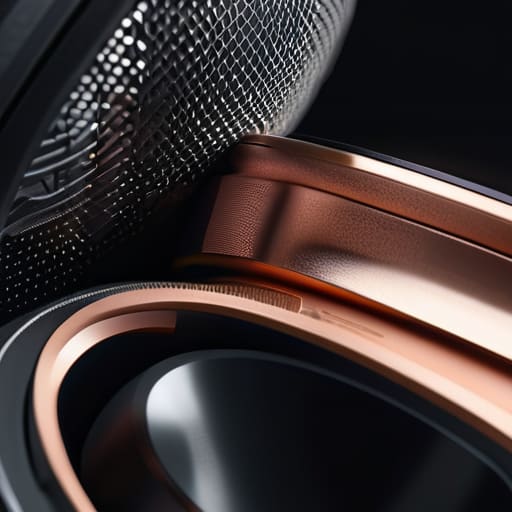
Most manufacturers will try to sell you on fancy RGB lights or “pro-grade” marketing jargon, but if you want to know what’s actually happening inside the earcups, you need to look at the drivers. In my years of engineering, I learned that the driver is the heart of the machine. A larger driver—usually measured in millimeters—typically allows for better air displacement. This means you get punchier, more controlled bass without that muddy, distorted sound that plagues cheap, flimsy units. When you’re looking at driver size and frequency response, don’t just look for the highest numbers; look for a balanced range that doesn’t sacrifice clarity just to boost the low end.
It isn’t just about volume, either. The frequency response tells you the spectrum of sound the hardware can actually reproduce. If a company won’t list the specific range, they’re likely hiding a product that sounds like it’s coming through a tin can. You want a wide, flat response so you can hear everything from the subtle footsteps of an enemy to the roar of an explosion. A well-tuned driver ensures a consistent, immersive soundstage that makes the difference between being distracted by noise and actually being in the game.
The Truth About Ergonomic Headset Design and Long Term Comfort

Most manufacturers will try to sell you on fancy RGB lighting or software-driven surround sound gaming experience, but they’re usually just masking poor physical construction. I’ve seen too many people drop a hundred dollars on a piece of gear only to find that after two hours, the clamping force feels like a vice grip on their skull. If the headband doesn’t distribute weight evenly, you aren’t going to enjoy your downtime; you’re just going to end up with a headache. You need to look for high-density memory foam and a frame that actually has some structural integrity rather than just being held together by cheap tension clips.
I also can’t stress enough how much the weight distribution matters when you’re deciding between wireless vs wired gaming audio. A wireless unit carries the extra burden of a battery, which can make the unit top-heavy if the engineers weren’t careful. If the center of gravity is off, that headset is going to slide or pull on your neck constantly. Don’t be fooled by “soft-touch” plastics that feel nice for five minutes; look for properly balanced weight distribution and breathable ear cushions that won’t turn your ears into a sauna.
Five Things to Check Before You Pull the Trigger
- Look at the cable, not just the wireless specs. I’ve seen too many “high-end” headsets where the cord feels like a piece of cheap twine; if it’s thin and flimsy, it’s going to fray at the jack within six months.
- Demand physical controls. If a company tells you that you have to navigate three different software menus on your PC just to adjust the volume, walk away. I want a tactile dial or a slider that I can feel without looking.
- Check the weight distribution, not just the total ounces. A headset might be light, but if all that mass is concentrated on the top of your head rather than the earcups, you’ll be nursing a headache before your first match is even over.
- Don’t fall for the “7.1 Surround Sound” marketing trap. Most of that is just cheap software processing that muddies the audio; you’re better off with a solid stereo driver that actually provides a clean, accurate soundstage.
- Inspect the hinge construction. If the adjustment sliders are made of thin, brittle plastic instead of reinforced metal or high-density polymer, that’s where the headset will snap the first time you toss it on your desk.
Roland’s Bottom Line: Don't Get Fooled by the Box
Ignore the flashy marketing about “7.1 Surround Sound” if the headset feels like it’s made of cheap, hollow plastic; a solid build and decent drivers will always beat a gimmick.
Prioritize physical comfort and driver quality over software bells and whistles, because no amount of RGB lighting will make a heavy, poorly balanced headset feel better after two hours.
Look for hardware that offers plug-and-play simplicity; if you need a PhD and a dozen drivers just to hear your game, the engineering has failed.
The Real Test of a Good Headset
I don’t care how many RGB lights they slap on the side or what kind of marketing jargon they use to describe the ‘spatial immersion’; if the headband feels like cheap tin and the drivers rattle after a month of use, you aren’t buying a piece of gear—you’re buying a future trip to the landfill.
Roland Delacroix
Don't Get Swept Up in the Hype

At the end of the day, choosing a headset isn’t about which box has the most flashing RGB lights or the loudest marketing campaign. It’s about understanding the mechanics of what you’re putting on your head. You need to look past the flashy packaging and focus on the actual build quality—the driver size that delivers clear audio without distortion, and an ergonomic design that doesn’t leave you with a headache after an hour of use. If a company can’t tell you the specifics of their frequency response or the materials used in the headband, they’re likely just selling you expensive plastic wrapped in clever branding.
I’ve spent enough years in manufacturing to know that if something is built poorly, it doesn’t matter how many features it claims to have; it’s going to fail you when you need it most. Don’t let the industry trick you into thinking that “new” always means “better.” Take your time, do your homework, and look for the hardware that prioritizes reliability over gimmicks. When you finally find that piece of gear that works the second you plug it in and stays comfortable through a long session, you’ll know you didn’t just buy a gadget—you bought a tool that actually earns its keep.
Frequently Asked Questions
Is a wireless connection actually reliable enough for serious gaming, or am I going to deal with lag and battery failure?
Look, if you’re playing competitive shooters, stay away from standard Bluetooth. The latency will drive you mad. You need a headset with a dedicated 2.4GHz USB dongle; that’s the only way to get near-instant response times. As for the battery, that’s where the “expensive plastic” problem kicks in. Don’t buy something that can’t be charged while you’re using it, or you’ll be stuck with a very expensive headband halfway through a session.
How much of that "7.1 Surround Sound" marketing is just software gimmicks instead of actual hardware capability?
Most of it is pure marketing fluff. Real surround sound requires multiple physical drivers positioned around your ears, but most “7.1” headsets are just standard stereo units using software tricks to mess with your timing and volume. They use digital signal processing to trick your brain into thinking a sound is behind you. It’s clever, sure, but it’s a software gimmick, not a hardware reality. If you want true spatial accuracy, don’t rely on a marketing sticker.
Are these braided cables actually more durable, or are they just a way for companies to charge more for the same old wire?
Look, I’ve seen enough thin, rubberized cables fray and snap after six months to know a good thing when I see it. A braided sleeve isn’t just marketing fluff; it provides much-needed structural reinforcement against kinking and tension. It protects the internal copper from the constant tugging and twisting that kills cheap gear. If the price jump is reasonable, go for the braid. It’s a mechanical safeguard, not just an aesthetic choice.
