
I was sitting at my workbench yesterday, cleaning the oxidation off a set of vintage Sennheisers, when I saw another advertisement for a “revolutionary” new gaming headset. It was covered in glowing LEDs and promised “spatial immersion” through a dozen different software-driven gimmicks. Honestly, it makes my blood boil. Most of these manufacturers are just trying to bury a lack of real engineering under a mountain of flashy gaming headset features that don’t actually improve your experience. They want you to believe that more buttons and more lights equal better performance, but in my thirty years in systems engineering, I’ve learned that complexity is often just a mask for poor design.
I’m not here to sell you on the latest RGB-lit piece of junk. My goal is to strip away the marketing jargon and look at the actual hardware—the drivers, the headband tension, and the build materials. I’m going to tell you which features actually provide a tactical advantage and which ones are just expensive plastic designed to drain your wallet. If you want to know what will actually hold up after a year of heavy use, you’re in the right place.
Table of Contents
- Why Driver Size and Frequency Response Actually Matter
- The Truth About Surround Sound Technology Hype
- Five Things to Look For Before You Open Your Wallet
- Bottom Line: What’s Worth Your Hard-Earned Money
- ## Stop Chasing the Marketing Buzzwords
- Cutting Through the Marketing Noise
- Frequently Asked Questions
Why Driver Size and Frequency Response Actually Matter

Most manufacturers will try to sell you on a dozen different bells and whistles, but if you want to know if a headset is actually worth your hard-earned cash, you need to look at the guts of the thing. When I’m looking at a spec sheet, I head straight for the driver size and frequency response. It’s easy to get caught up in the marketing fluff, but the driver is the engine of the whole operation. A larger driver isn’t a magic bullet, but it generally allows for better air displacement, which means you aren’t just getting muddy, rattling bass. You want a frequency response that actually covers the spectrum without clipping or sounding like a tin can.
If the range is too narrow, you’re going to miss the subtle details—the footstep behind you or the click of a reload. It’s not about having the loudest sound; it’s about clarity and precision. I’ve seen plenty of “premium” headsets that boast about fancy surround sound technology, but if the underlying drivers are cheap, low-quality components, all that software is just trying to mask a fundamentally flawed piece of hardware. Don’t let them sell you a polished version of a bad product.
The Truth About Surround Sound Technology Hype

Now, let’s talk about the marketing circus they call “7.1 Virtual Surround Sound.” If you look at the spec sheets, they’ll promise you a cinematic experience that makes you feel like you’re standing in the middle of a battlefield. In reality, most of this is just software trickery—mathematical algorithms trying to fool your brain into thinking sound is coming from behind you when it’s actually just bouncing off your eardrums. It’s a clever trick, but don’t mistake it for true spatial audio. For most people, a well-tuned pair of stereo drivers will give you a much more accurate soundstage than some cheap digital processing that just muddies up the mids.
I’ve seen too many manufacturers slap a “surround sound” sticker on a piece of junk to justify a higher price tag. If they can’t get the basic driver size and frequency response right, all the virtual processing in the world won’t save them. You aren’t paying for better acoustics; you’re paying for a software license. Before you open your wallet, ask yourself if you actually need that extra layer of digital noise, or if you’d be better off investing that money into something that actually lasts, like better ear cup material comfort or a sturdier frame.
Five Things to Look For Before You Open Your Wallet
- Check the headband and hinges for metal reinforcement. If the entire frame is just molded plastic, it’s going to snap the first time you drop it or even just pull it over your head too hard.
- Look for replaceable ear pads. Most of these companies use cheap faux leather that flakes off like dandruff after six months; if you can’t swap them out for real fabric or better foam, you’re just buying a disposable product.
- Prioritize a detachable cable. A single frayed wire shouldn’t turn a hundred-dollar piece of gear into a paperweight, so make sure you can just plug in a new cord instead of throwing the whole unit away.
- Don’t get blinded by “software-driven” features. If a headset requires a bloated, 500MB driver installation just to adjust the volume, it’s a sign of lazy engineering. You want hardware that works the moment you plug it in.
- Test the weight distribution. A headset can have the best specs in the world, but if it’s top-heavy and digs into your skull after twenty minutes, it’s a poorly designed tool that’s going to give you a headache.
Bottom Line: What’s Worth Your Hard-Earned Money
Stop looking at the decibel numbers on the box; focus on whether the drivers are made of decent materials that won’t rattle or distort after a few months.
Ignore the “7.1 Virtual Surround” stickers if they’re just software gimmicks; a solid pair of stereo drivers will always give you a more natural soundstage than cheap digital processing.
Check the build quality before you reach for your wallet—if the headband is all thin plastic and the padding feels like cheap foam, it’s going to break, no matter how good it sounds in the showroom.
## Stop Chasing the Marketing Buzzwords
“I’ve spent enough years looking at schematics to know that a dozen fancy software ‘features’ won’t make up for a poorly built driver and a cheap plastic hinge; if the hardware isn’t solid, the rest is just expensive noise.”
Roland Delacroix
Cutting Through the Marketing Noise
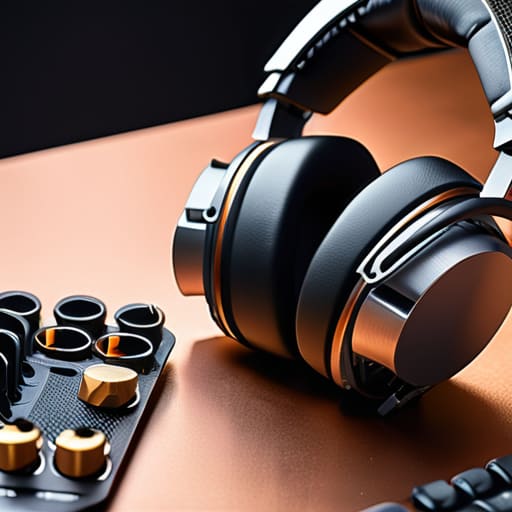
At the end of the day, you need to stop looking at the colorful packaging and start looking at the fundamentals. I’ve spent enough time looking at schematics to know that a fancy “7.1 Virtual Surround” sticker won’t save a headset with garbage drivers. Focus on the actual hardware—the driver quality, the frequency range, and the physical build of the headband and earcups. If the construction feels flimsy or the specs look suspiciously vague, walk away. You aren’t just buying a way to hear footsteps in a game; you are investing in a piece of equipment that needs to last more than a single season of heavy use.
Don’t let the manufacturers convince you that more features always equal better performance. In my experience, the most expensive option is rarely the smartest one. A reliable tool is one that does exactly what it says on the box without requiring a software update every Tuesday just to function. Buy something that feels solid in your hands, sounds clean to your ears, and doesn’t break the bank just to satisfy a marketing department’s quota. Stick to the basics, trust your gut, and buy for quality, not for the hype.
Frequently Asked Questions
How can I tell if the microphone is actually going to pick up my voice or if it's just going to sound like I'm talking through a tin can?
Look, don’t trust the “studio-quality” claims on the box. Most of those mics are cheap, thin-diaphragm junk. To see if a headset is worth your money, check if it’s a condenser mic and look for a noise-canceling feature that actually works. If you can, plug it in and record a quick clip. If your voice sounds thin or hollow—like you’re shouting into a coffee tin—put it back on the shelf. It’s not worth the headache.
Are those fancy RGB lights and software suites worth the extra money, or am I just paying for useless LEDs?
Look, if you’re buying a headset because it glows in seven different colors, you’re being sold a bill of goods. Those RGB lights don’t improve your audio; they just drain your battery and look cheap after a few months. As for the software suites—most are bloated junk that hogs your CPU. Unless that software allows for a legitimate, granular EQ adjustment that actually works, you’re just paying extra for useless LEDs and digital clutter.
What kind of build materials should I be looking for to make sure the headband doesn't snap after six months of use?
Look, if you see a headset made entirely of lightweight, thin plastic, put it back on the shelf. That’s just a ticking time bomb for your wallet. You want to see reinforced steel or aluminum in the headband frame. If it’s plastic, it needs to be high-density, not that flimsy stuff that creaks when you move. Ideally, look for padded tension points and metal sliders. If it feels like a toy, it’ll break like one.
