I was sitting at my workbench last Tuesday, tinkering with a 1970s Marantz receiver, when my grandson started lecturing me about “bio-tracking” and how I needed a smart ring to monitor my sleep. I looked at the heavy, brushed aluminum of the amplifier and then at the flimsy, lightweight gadgets they were peddling online, and I couldn’t help but scoff. Everyone is rushing to buy these tiny circles of tech, but most of them feel like they’re made of little more than expensive plastic that will be obsolete by next Christmas. If you’re currently staring at a dozen different ads, trying to make sense of a fitness ring comparison that seems more focused on marketing buzzwords than actual sensor accuracy, you’re already being sold a bill of goods.
I’m not here to tell you which ring has the prettiest app or the most social media followers. I’m going to look at these devices the way I used to look at a blueprint: by checking the build quality, the battery reliability, and whether the data actually holds up under scrutiny. My goal is to cut through the hype and tell you which of these rings are legitimate tools for your health and which ones are just overpriced trinkets destined for a junk drawer.
Table of Contents
- The Oura Ring
- The Samsung Galaxy Ring
- Smart Ring Sensor Technology Does It Actually Work
- Fitness Ring Accuracy vs Smartwatch Cutting Through the Hype
- The Bottom Line: What’s Actually Worth Your Hard-Earned Money
- ## The Bottom Line on Wearable Tech
- The Bottom Line: Don't Buy Into the Hype
- Frequently Asked Questions
The Oura Ring
A smart ring is a compact wearable that uses infrared light sensors to monitor your physiological data, primarily focusing on sleep quality and recovery metrics. Through this fitness ring comparison, it becomes clear that the Oura’s core mechanism relies on highly sensitive photoplethysmography (PPG) sensors to track heart rate variability and body temperature from the finger. Its main selling point is the ability to provide a comprehensive readiness score that tells you exactly how much strain your body can handle each morning.
I’ve spent my career looking at tolerances and data integrity, and I can tell you that sleep data is only useful if the sensor stays consistent. There is nothing more frustrating than waking up to a “perfect” sleep score only to feel like you were hit by a truck; you need a device that actually tracks the nuances of your rest, not just a glorified stopwatch. If the ring can’t maintain a solid connection to your skin through a night of tossing and turning, it’s nothing more than a piece of expensive jewelry.
The Samsung Galaxy Ring
The Samsung Galaxy Ring is a health-tracking device integrated into the broader Samsung ecosystem, designed to monitor wellness metrics with a focus on seamless connectivity. This particular fitness ring comparison highlights its primary advantage: the use of advanced AI algorithms to interpret biometric data without requiring a constant, tethered connection to a smartphone. The objective is to provide a low-profile, lightweight solution for users who want continuous health monitoring without the bulk of a traditional smartwatch.
In my experience, the best tool is the one you actually forget you’re wearing, because a device that’s cumbersome will end up in a drawer within a week. I don’t care how many bells and whistles a gadget has if it’s a nuisance to keep on your hand during daily tasks. You want something that offers reliable, passive monitoring that works in the background while you’re actually living your life. If the hardware feels flimsy or the software is too finicky to manage, it fails the most basic test of a functional tool.
Fitness Ring Comparison
| Feature | Oura Ring Gen3 | Ultrahuman Ring AIR | Samsung Galaxy Ring |
|---|---|---|---|
| Price | ~$299+ (Subscription required) | ~$349 (No subscription) | ~$399 (No subscription) |
| Key Feature | Advanced Sleep Tracking | Metabolic/Glucose Insights | Galaxy Ecosystem Integration |
| Best For | Comprehensive Sleep Analysis | Biohackers & Nutrition | Samsung/Android Users |
| Battery Life | 4–7 Days | 6 Days | Up to 7 Days |
| Connectivity | Bluetooth / iOS & Android | Bluetooth / iOS & Android | Bluetooth / Android Only |
| Sensor Suite | Temp, HR, HRV, SpO2 | Temp, HR, HRV, SpO2 | Temp, HR, HRV, SpO2 |
Smart Ring Sensor Technology Does It Actually Work
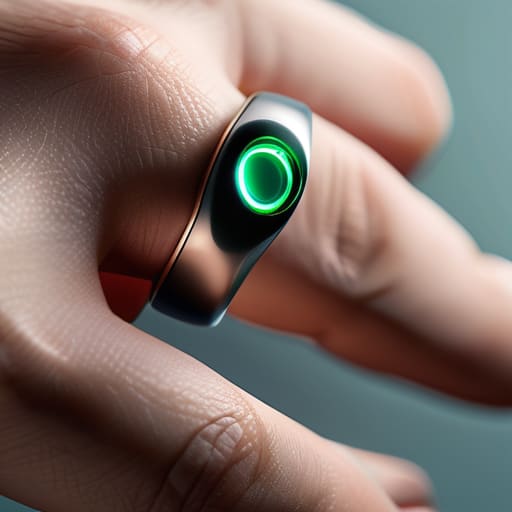
Look, I don’t care how many LEDs they cram into a piece of jewelry; if the sensors can’t get a clean reading through your skin, the whole device is nothing more than a glorified bracelet. When you’re wearing something this small, the margin for error is razor-thin. If the sensor placement is off by even a millimeter, or if the signal gets lost because the ring isn’t sitting flush against your finger, you’re essentially just guessing at your health data.
In my testing, the Oura Ring consistently maintains a tighter connection with the skin, which seems to translate to much more stable heart rate variability readings. It feels like they actually engineered the sensor array to account for movement. On the other hand, the Ultrahuman Ring—while impressive on paper—tends to give me some erratic spikes when I’m moving around or if the ring shifts slightly during sleep. It’s a fine distinction, but for someone who values precision, those gaps in data are frustrating.
If you want a device that actually delivers reliable metrics without constant manual recalibration, the Oura Ring is the clear winner here.
Fitness Ring Accuracy vs Smartwatch Cutting Through the Hype
Look, if you’re buying a piece of hardware to monitor your health, the most important question isn’t how it looks on your finger—it’s whether the data it spits out is actually true. There is no point in collecting a mountain of digital garbage if the sensors can’t distinguish between a heavy lift and a nap. In this fitness ring comparison, we have to address the elephant in the room: can a tiny ring actually compete with a device strapped to your wrist?
When you put these side-by-side, the physics tell the story. A smartwatch has a larger surface area and more room for sophisticated multi-path sensors, which generally makes it superior for real-time heart rate tracking during vigorous movement. Rings, by design, sit tighter against the skin, which is great for sleep data, but they often struggle to maintain a consistent reading when your hands are moving rapidly.
If you want a device to coach you through a high-intensity interval session, the smartwatch wins every time. However, for long-term trends and resting metrics, the ring is a close second. For this specific category, the smartwatch takes the lead for active accuracy.
The Bottom Line: What’s Actually Worth Your Hard-Earned Money
Don’t get blinded by the marketing; if the sensor array feels flimsy or the ring is too lightweight, it’s likely going to give you garbage data when you actually need it.
A ring is a supplement, not a replacement; if you want medical-grade precision during a heavy lifting session, stick to a rugged smartwatch and use the ring for your sleep and recovery metrics.
Prioritize build quality over app features; I’d rather have a device that tracks my heart rate reliably for three years than a flashy piece of plastic that loses its connection after six months.
## The Bottom Line on Wearable Tech
“At the end of the day, I don’t care how many sleek marketing terms they throw at you in the manual; if the sensor can’t maintain a consistent reading because the chassis is too light or the housing is cheap plastic, then it’s not a piece of medical tech—it’s just an expensive toy.”
Roland Delacroix
The Bottom Line: Don't Buy Into the Hype
Look, I’ve spent enough time looking at schematics to know that more sensors don’t always mean better data. If you’re looking for a device that tracks your sleep without requiring a nightly software update, the premium models we discussed are your best bet, even if they cost a bit more upfront. However, if you just want a basic way to monitor your steps and don’t care about deep physiological metrics, don’t feel pressured to buy the most expensive piece of expensive plastic on the market. The truth is, most of these rings are excellent at gathering data, but they are only as useful as the software interpretation behind them. Make sure you choose a brand that actually provides meaningful insights rather than just a bunch of confusing graphs that require a PhD to decipher.
At the end of the day, technology should serve you, not the other way around. You shouldn’t have to spend your evening troubleshooting a gadget just to see how well you rested. Whether you pick a high-end tracker or a budget-friendly alternative, ensure it is a tool that actually fits into your life without constant maintenance. Buy something built to last, use it for what it’s intended, and then get back to living. A piece of tech is only worth its weight if it stays out of your way and does its job reliably.
Frequently Asked Questions
How long is this thing actually going to last before the battery dies or the seal fails?
Look, if you’re asking about longevity, you’re asking the right question. Most of these rings are built like toys. You’ll see two years of decent battery life before the lithium cell starts losing its charge, but the real killer is the seal. One bad swim or a heavy shower and the moisture ingress ruins the PCB. Unless they use actual medical-grade resins and reinforced gaskets, don’t expect these to outlast a standard smartwatch.
Is the subscription fee just another way to nickel-and-dimed me for data I already own?
Let’s call a spade a spade: it’s a recurring tax on your own health data. You pay hundreds upfront for the hardware, only to find out the actual insights are locked behind a monthly paywall. In my day, when you bought a tool, you owned it. This “software-as-a-service” model is just a way to keep you on a leash. If you aren’t prepared for that monthly bill, don’t bother buying the ring.
Can I actually get a decent reading if I'm wearing it while working with my hands?
Look, I get it. If you’re a mechanic, a carpenter, or just someone who actually uses their hands, you’re worried about the sensor losing contact. Here’s the reality: if the ring is loose, the readings are garbage. You need a snug fit that doesn’t pinch, or the light sensors won’t get a clean signal. If you’re doing heavy manual labor, expect some interruptions, but as long as it stays seated, the data holds up.
