I spent thirty years in manufacturing, where if a component wasn’t built to spec, it was scrap. Nowadays, I look at the consumer tech market and honestly, it makes my blood pressure rise. You go online to find the best webcams for video calls, and what do you find? A sea of overpriced, flimsy plastic shells that promise “4K glory” but deliver nothing but grainy, stuttering nonsense the moment your lighting isn’t perfect. It’s frustrating to see people shelling out a hundred dollars for a gadget that feels like a child’s toy and performs even worse.
I’m not here to sell you on the marketing fluff or the flashy software gimmicks that nobody actually uses. Instead, I’ve put my notepad to work and narrowed things down to the hardware that actually holds up. In this list, I’m going to show you five specific models that offer real reliability, decent optics, and a build quality that won’t leave you frustrated mid-meeting. I’ll tell you exactly which ones are worth your hard-earned money and which ones are just expensive junk destined for the landfill.
Table of Contents
- The Reliable Workhorse: Logitech C920s
- For the Professional Setup: Logitech Brio 4K
- The Budget Option That Doesn't Suck: Anker PowerConf C200
- The High-End Specialist: Razer Kiyo Pro
- The Minimalist's Choice: Microsoft Modern Webcam
- The Bottom Line on Buying a Webcam
- The Bottom Line
- The Bottom Line
- Frequently Asked Questions
The Reliable Workhorse: Logitech C920s

I’ve seen a lot of gadgets come and go in my time, but this little unit from Logitech is about as close to a standard-issue tool as you’re going to get. It isn’t trying to reinvent the wheel with flashy software or ridiculous gimmicks; it just does its job without throwing a tantrum every time you plug it in. The build quality is decent enough for a consumer device, and the 1080p resolution is actually sharp without looking like an over-processed digital mess.
For the Professional Setup: Logitech Brio 4K
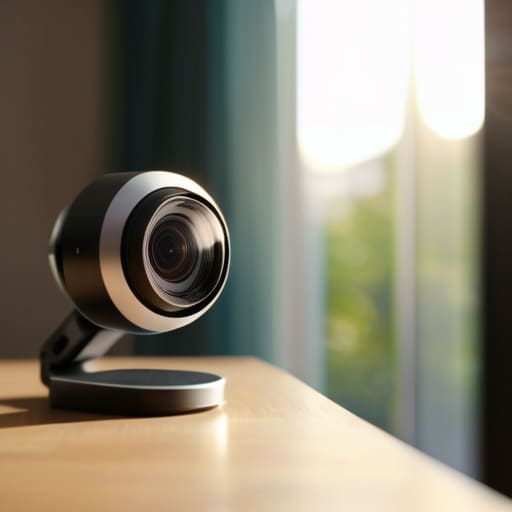
If you’re the type who spends eight hours a day in front of a screen for high-stakes meetings, you might want to step up to the Brio. It’s a bit more of an investment, but the glass lens quality is a notable step up from the cheaper plastic models. It handles tricky lighting conditions—like that annoying sunbeam hitting your desk at 2 PM—much better than the budget stuff, thanks to its decent sensor.
The Budget Option That Doesn't Suck: Anker PowerConf C200

Most “budget” webcams I test feel like they were manufactured by someone who has never actually used a computer. They’re lightweight, creaky, and the image looks like it was shot through a layer of Vaseline. The Anker C200 is a refreshing exception to that rule. It has a surprising amount of heft for the price point, and the adjustable field of view is a practical touch that most manufacturers seem to have forgotten.
The High-End Specialist: Razer Kiyo Pro
Now, I usually steer clear of “gaming” brands because they tend to prioritize RGB lights over actual engineering, but the Kiyo Pro is a bit of an outlier. The standout feature here is the light sensor. Most webcams struggle the moment the room gets dim, but this one handles low-light environments with a level of competence I haven’t seen in many other consumer-grade sensors.
The Minimalist's Choice: Microsoft Modern Webcam
Sometimes, you just want something that stays out of the way and doesn’t require a manual the size of a phone book. The Microsoft Modern Webcam is designed for exactly that. It’s clean, it’s simple, and it lacks all the unnecessary “fluff” that modern tech companies try to shove down your throat. It focuses on the fundamentals of video—clear color reproduction and a decent frame rate.
The Bottom Line on Buying a Webcam
Stop paying for “smart” software features that just bloat your CPU; focus on the glass and the sensor quality instead.
If the mounting bracket feels like flimsy, lightweight plastic, it’s going to wobble every time you type, and no amount of resolution will fix a shaky image.
Don’t forget that lighting is more important than the camera itself—even a decent piece of hardware looks like garbage in a dark room.
The Bottom Line
At the end of the day, I don’t care how many fancy software features a company promises you in their marketing; if the sensor can’t handle a little bit of low light without turning your face into a grainy mess, you’re just buying an expensive paperweight.
Roland Delacroix
The Bottom Line
Look, I’ve seen enough gadgets come and go to know that most of them are designed to be replaced in eighteen months, not to actually serve a purpose. When you’re picking out one of these webcams, stop looking at the marketing buzzwords and start looking at the build. Whether you go with a high-end Logitech for its reliability or a more budget-friendly option that actually delivers on its specs, the goal is the same: you want a tool that works every single time you plug it in. Don’t get distracted by unnecessary software bloat or flashy features that require a manual the size of a phone book just to adjust the brightness. Focus on the sensor quality and the physical stability of the mount. If it feels like a toy, it’s going to perform like one.
At the end of the day, your video call shouldn’t be a technical struggle. You’re trying to connect with people, whether it’s for a professional meeting or a chat with family, and your hardware should be the last thing on your mind. Investing in a piece of equipment that is built to last saves you the headache of troubleshooting mid-sentence and the frustration of having to buy the same thing twice. Buy something solid, set it up once, and then get back to the business of actually living your life.
Frequently Asked Questions
Do I really need to spend a fortune on a 4K webcam, or is 1080p enough for a standard office setup?
Look, I’ve spent enough time looking at schematics to know that more pixels don’t always mean a better picture. For a standard office setup, 1080p is more than enough. Most people are watching you on a tiny laptop screen or a compressed Zoom window anyway; they won’t see that extra 4K detail. Save your money. Invest in a decent light source or a better microphone instead. That’s what actually makes you look professional.
How much does my lighting situation actually matter compared to the quality of the lens itself?
Look, I’ve seen guys spend five hundred bucks on a high-end lens only to sit in a dark corner with a single flickering bulb. It’s a waste of good money. You can have the finest optics in the world, but if there’s no light hitting the sensor, all you’re getting is a grainy, digital mess. A decent light source will do more for your image than a premium lens ever could. Fix your lighting first.
Is it worth buying a dedicated external microphone, or can I just rely on the one built into the webcam?
Look, if you’re just checking in with the grandkids, the webcam mic is fine. But if you’re doing anything professional, don’t rely on it. Those tiny, built-in diaphragms are prone to picking up every hum from your refrigerator and every click of your keyboard. It sounds thin and hollow. If you want to actually be heard without sounding like you’re underwater, get a dedicated USB microphone. It’s a small investment for a massive jump in reliability.
