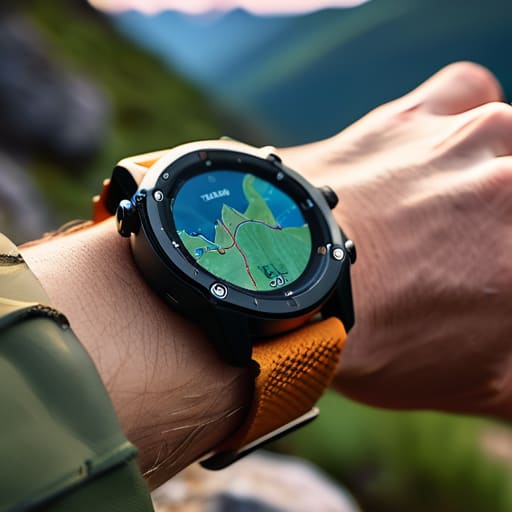
I was halfway up a ridge in the Cascades last autumn when my “state-of-the-art” wrist gadget decided it was time for a software update. There I was, staring at a spinning loading icon while the temperature dropped and the clouds rolled in, realizing that my expensive piece of tech was about as useful as a paperweight. It’s the same story I see every week: manufacturers cramming every unnecessary sensor into a device and calling it innovation, when all they’ve really done is create a fragile, battery-hungry distraction. If you’re looking for a smartwatch for hiking that actually prioritizes survival and reliability over flashy animations, you need to stop listening to the marketing departments and start looking at the build quality.
I’m not here to sell you on the latest trend or some overpriced gadget that requires a stable Wi-Fi connection just to show you a map. My goal is simple: I’m going to cut through the noise and tell you which models are built like actual tools and which ones are just expensive plastic. I’ll be looking at battery longevity, screen visibility in direct sunlight, and whether the casing can actually handle a few scrapes against granite. You deserve gear that works when you need it, not gear that needs a charger every six hours.
Table of Contents
- Reliable Battery Life for Long Treks or Total Failure
- Topographic Map Integration That Wont Leave You Stranded
- Five Things to Check Before You Hand Over Your Hard-Earned Cash
- Bottom Line: What to Look for Before You Buy
- The Real Cost of a Dead Battery
- Don't Get Caught Holding an Expensive Paperweight
- Frequently Asked Questions
Reliable Battery Life for Long Treks or Total Failure
Let’s get one thing straight: a fancy screen is useless if the device is a paperweight by noon. I’ve seen too many people buy these gadgets based on how many colorful apps they have, only to realize they have zero battery life for long treks. When you’re ten miles from the trailhead and the sun is dipping below the treeline, you don’t care about your heart rate variability or your social media notifications. You need to know where you are. If the manufacturer can’t give you a straight answer on how many hours the GPS stays active, walk away.
I always look for hardware that prioritizes efficiency over flashiness. A decent piece of kit should handle basic trail navigation technology without draining the cell in a single afternoon. I’ve noted in my pad that some of these newer models claim “weeks” of life, but that’s usually with all the sensors turned off. In the real world, with the GPS running and the backlight hitting, those numbers drop fast. You want a device that stays alive long enough to get you home, not one that dies just when the terrain starts getting tricky.
Topographic Map Integration That Wont Leave You Stranded
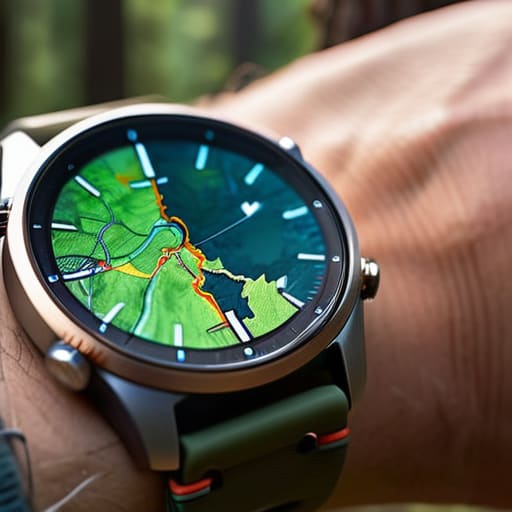
Most of these gadgets claim to show you the world, but when you’re standing in a thicket of pine with no cell service, a glorified step counter isn’t going to help you find the trailhead. You need real topographic map integration that actually renders contours and elevation lines clearly on a small screen. I’ve seen too many devices try to rely on a basic GPS ping that tells you where you are, but fails to show you what is actually around you. If the software is laggy or the map resolution is grainy, you’re just guessing, and guessing in the backcountry is a quick way to end up in a search-and-rescue report.
I look for hardware that handles data locally. You shouldn’t be dependent on a cloud connection to see the terrain. A decent piece of kit should include robust altimeter and barometer features to give you a sense of your verticality and changing weather patterns alongside those maps. If the interface is too cluttered with “social sharing” nonsense and doesn’t prioritize the actual map data, it’s just more expensive plastic. You want a tool that prioritizes spatial awareness over flashy animations.
Five Things to Check Before You Hand Over Your Hard-Earned Cash
- Look for physical buttons, not just a touchscreen. When you’re out in the rain or wearing gloves, trying to swipe a piece of glass is a fool’s errand. You need tactile feedback so you know you’ve actually pressed something.
- Check the build materials. If the casing is nothing but lightweight polycarbonate, it’s going to crack the first time you bump it against a granite slab. Look for reinforced polymers or stainless steel if you want it to last more than one season.
- Verify the GPS chip quality. Don’t just take the marketing department’s word for it; look for mentions of multi-band GNSS. If the watch can’t lock onto a signal under heavy tree canopy, it’s just a glorified pedometer.
- Don’t ignore the charging standard. If the watch uses some proprietary, flimsy magnetic cable that breaks if you look at it wrong, you’re going to have a bad time. I prefer anything that uses a standard, rugged connection.
- Test the water resistance rating yourself. “Water resistant” is a vague term used to sell junk. You want an actual IP rating or an ATM depth rating. If you’re crossing streams, you need to know that device isn’t going to short out and die.
Bottom Line: What to Look for Before You Buy
Don’t get blinded by fancy touchscreens; if you’re wearing gloves or it’s raining, you need physical buttons that actually click.
A map is useless if the hardware can’t keep up; ensure the device has dedicated GPS chips and enough internal memory so it doesn’t lag when you’re actually lost.
Prioritize build quality over “smart” features; if the casing feels like cheap, hollow plastic, it won’t survive a single tumble against a granite rock.
The Real Cost of a Dead Battery
“I’ve seen enough poorly engineered gear to know that a fancy touchscreen means nothing if the power cell gives up the ghost three miles from the trailhead. When you’re out there, you don’t need a digital assistant; you need a reliable piece of hardware that stays awake as long as you do.”
Roland Delacroix
Don't Get Caught Holding an Expensive Paperweight
At the end of the day, choosing a hiking watch isn’t about which one has the prettiest interface or the most social media notifications. I’ve spent enough time looking at blueprints to know that a device is only as useful as its weakest component. If the battery gives up the ghost three miles into a canyon, or if the mapping software freezes when the signal gets spotty, you aren’t looking at a tool—you’re looking at expensive junk. You need to prioritize rugged build quality and reliable GPS over every flashy gimmick the marketing departments throw at you. Stick to the specs that matter: battery longevity, screen visibility in direct sunlight, and software that actually performs under pressure.
Look, I’m not saying you should head into the wilderness with nothing but a compass and a prayer. Technology can be a massive asset if it’s built to last. But remember, the gear is there to support your journey, not to become the center of it. Buy something that you can trust to sit on your wrist through rain, mud, and grit without a second thought. When you finally reach that summit and look out over the treeline, you shouldn’t be staring at a dead screen; you should be actually enjoying the view. Invest in reliability, and the rest will take care of itself.
Frequently Asked Questions
How much does the GPS accuracy actually matter when I'm deep in the brush versus just walking a marked trail?
Look, if you’re on a well-marked trail, a slight drift won’t kill you. But once you’re deep in the brush or under heavy canopy, that’s when the cheap sensors fail. When the signal struggles to pierce through thick foliage, a low-grade GPS will start “jumping” around, making you think you’re fifty feet from where you actually are. In the thick of it, accuracy isn’t a luxury; it’s the difference between finding camp and being lost.
Can these things really survive a drop on granite or a heavy downpour, or am I paying for a screen that’ll crack the first time I trip?
Look, if you’re out on a trail, “water-resistant” isn’t enough; you need something that can actually take a beating. I’ve seen too many people buy these sleek, glass-heavy gadgets that shatter the moment they clip a rock. You want a watch with a reinforced bezel and a high-grade sapphire crystal. If the manufacturer won’t explicitly state the MIL-STD-810 rating, don’t bother. You aren’t paying for a screen; you’re paying for peace of mind.
Is it worth paying the premium for solar charging, or is that just more marketing fluff that won't actually help me in the shade?
Look, I’ve seen enough “revolutionary” features in my time to know when a company is just padding the price tag. In the shade or under a thick canopy, that solar strip is essentially decorative. It won’t save your skin. However, if you’re out in the open sun for ten hours a day, it can provide a decent trickle charge to keep the device breathing. It’s a bonus, not a lifeline. Don’t pay extra for it expecting a miracle.
